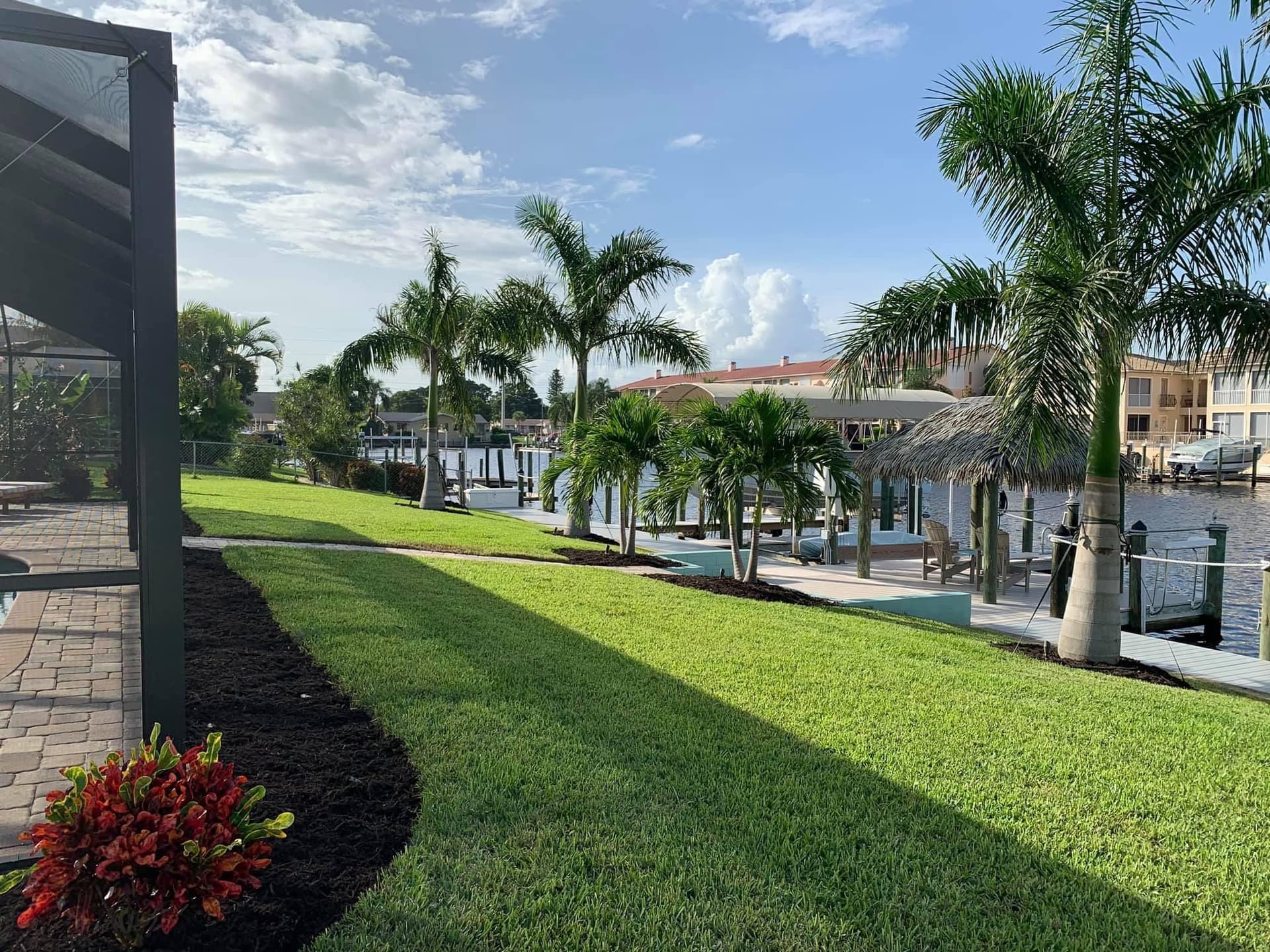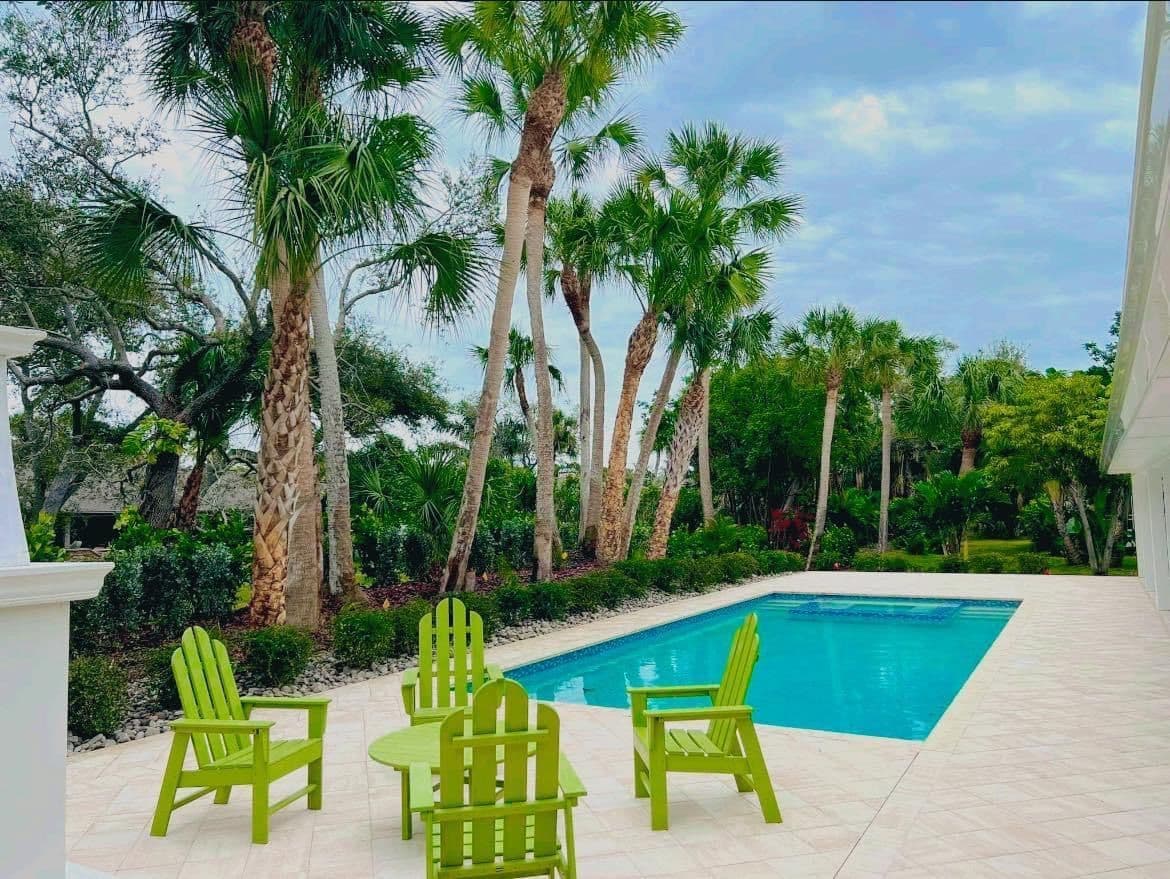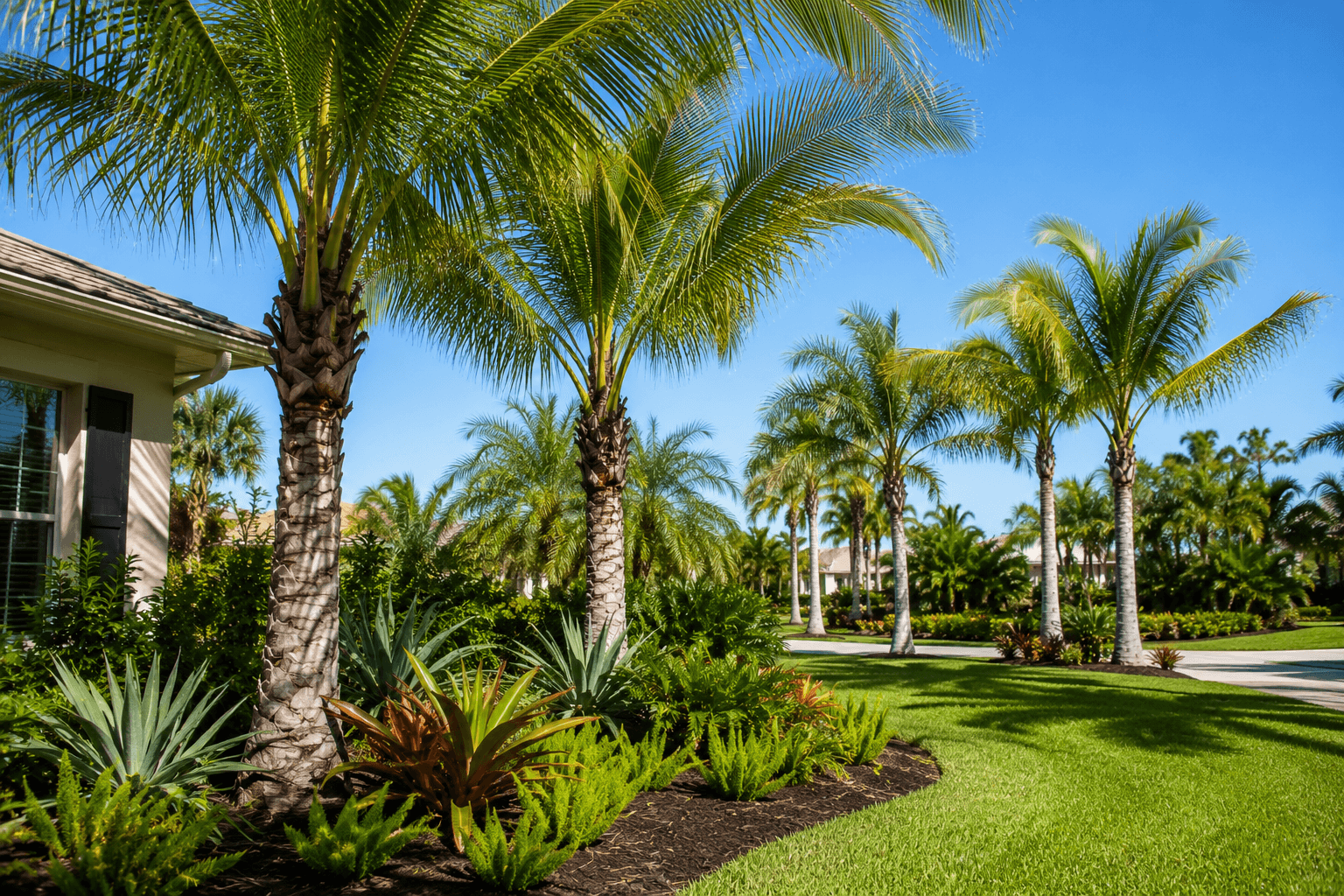
Walk any neighborhood in Cape Coral and you'll see a dozen different palm species, often planted six feet apart. Some look magazine-perfect. Others look thin and tired. The difference is almost always whether the palm matches its planting spot, not the price someone paid at a nursery. We've installed thousands of palms across Lee County since 1986, and the lesson keeps repeating: the best palm for your yard is the one whose mature size, sun needs, and salt tolerance fit the spot you have. Get that right, and a palm pays you back for decades.
Start With the Spot, Not the Palm
Before you fall in love with a Royal palm in a magazine, walk the planting area and answer four questions:
How much direct sun does the spot get? Six or more hours of direct light counts as full sun. Less than four is mostly shade. Most palms want full sun, but a few tolerate part shade.
What's the mature height clearance overhead? Power lines, roof eaves, second-story windows. Many homeowners plant Royal palms 10 feet from the house and end up paying for removal a decade later when crowns reach 40 feet.
How close is the structure? Trunk roots stay narrow, but crown shade and frond drop affect roofs, gutters, and pool screens.
What's the soil like? Cape Coral and most of Lee County is sandy with fast drainage and low natural fertility. That suits palms in general but limits how much standing water they tolerate near canals or low spots.
More palms get planted in the wrong size than the wrong species. Solve sizing first.
Workhorse Palms by Size
Florida has more than 70 palm species in the trade. Here are the ones that actually thrive across Cape Coral, Fort Myers, and the rest of Lee County, sorted by mature height.
Pygmy Date Palm (Phoenix roebelenii): clumping, slow-growing, perfect for entryways and pool surrounds
Triangle Palm (Dypsis decaryi): unusual silvery-blue fronds in a strict triangle pattern, drought-tolerant
European Fan Palm (Chamaerops humilis): cold-hardy, multi-trunked, Mediterranean look
Bottle Palm (Hyophorbe lagenicaulis): distinctive swollen base, single trunk, adds character to small yards
Foxtail Palm (Wodyetia bifurcata): symmetrical, tropical, excellent in groups of three
Christmas Palm (Adonidia merrillii): single or triple-trunk, bright red fruit December through January
Sylvester Palm (Phoenix sylvestris): silver-blue fronds, formal upright shape, drought-tolerant
Sabal Palm (Sabal palmetto): native, hurricane-tested, low-maintenance, Florida's state tree
Royal Palm (Roystonea regia): the Cape's signature street tree, smooth gray trunks, needs full sun and room
Coconut Palm (Cocos nucifera): salt-tolerant, beachy, but susceptible to lethal yellowing in Lee County
Date Palm (Phoenix dactylifera): formal, large fronds, great as a single specimen near pools
Bismarck Palm (Bismarckia nobilis): silver-blue fan fronds, dramatic, needs lots of horizontal space
Pick the size first, then choose within that size based on sun and salt.
Florida Climate Considerations
Salt Tolerance for Coastal Properties
Cape Coral has more than 400 miles of canals. If your yard borders a canal, sees salt spray from the Gulf, or sits within a few hundred yards of saltwater, salt tolerance matters more than almost anything else.
High salt tolerance: Coconut, Sabal, Date, Sylvester, European Fan. Moderate: Foxtail, Christmas, Bismarck. Low: Royal, Triangle. We've replaced burned-out Royal palms on canal-front properties more times than we can count. Owners loved the look. The salt killed them in three to five years.
Cold Hardiness in Lee County (Zone 10a to 10b)
Most of Cape Coral sits in USDA hardiness zone 10a (winter lows of 30 to 35 °F). Inland Fort Myers and Lehigh Acres can drop into upper 20s in extreme cold snaps. Choose accordingly:
Cold-hardy enough for occasional 25 °F: Sabal, European Fan, Pindo, Sylvester. Need protection below 30 °F: Royal, Coconut, Bismarck, Bottle, Triangle. Damaged at 32 °F: most ornamental tropicals.
Wind Resistance
Lee County's hurricane history makes wind resistance a real consideration. UF/IFAS rates palms in three tiers based on hurricane damage assessments. Sabal palms and bismarcks are the most wind-resistant. Royal and date palms recover well after damage. Most coconut, foxtail, and Christmas palms are vulnerable to crown loss in major storms. We cover this in detail in our hurricane season prep guide.
Common Palm Problems in Southwest Florida
Most palm problems in Lee County trace to nutrient deficiencies in our sandy, fast-draining soil rather than disease. The exception is lethal yellowing, which has been a major issue for coconut palms across the Cape since the 1980s.
Yellowing older fronds (typically a potassium or magnesium deficiency, fixable with palm-specific fertilizer)
Pencil-pointing or bent crowns (boron deficiency, common in pure sandy soil)
Sudden flower spike browning (possible lethal yellowing, especially on coconut palms)
White fungal growth at the base (Ganoderma butt rot, fatal, requires removal and avoiding replanting in the same spot)
Frizzled new fronds in winter (cold damage, usually recoverable)
Florida-Friendly fertilization (typically 8-2-12 with micronutrients, applied four times a year) prevents most of the palm problems we see.
Where to Buy Palms in Cape Coral
Florida law requires a state-certified plant inspection certificate for nursery stock, and Lee County has specific phytosanitary rules for citrus and certain palms. Reputable nurseries comply automatically; roadside sellers often do not.
Our retail and wholesale nursery yard at 425 SW Pine Island Road carries some of the species above. We bring in Florida-grown stock from accredited growers, so plants arrive already acclimated to SWFL conditions. Stop by to walk the yard, or contact us if you have a specific size in mind.
If you are buying elsewhere, look for a visible state inspection tag on the container, healthy uniform frond color (yellowing is a red flag), a solid undamaged trunk and crown, and a container appropriate for the palm size. Root-bound stock struggles to establish.
Frequently Asked Questions
How much does a mature palm tree cost in Cape Coral?
When is the best time to plant a palm in Florida?
How often should I water a newly-planted palm?
Can I plant a palm myself, or do I need a professional?
Why is my palm tree yellowing?
Final Thoughts
The best palm tree for your yard is the one that matches its spot. Sun, salt, soil, and mature size matter more than species names you have heard. Buy from a reputable nursery, plant at the right time of year, and feed correctly. With those four boxes checked, a palm pays you back for two or three decades.
Key Takeaways
Match palm size and species to the planting spot before falling in love with a species
Salt tolerance matters most for canal-front and coastal properties
USDA zone 10a applies to most of Lee County (occasional lows below 30 °F possible)
Florida-Friendly fertilization (8-2-12 with micros, four times a year) prevents most palm problems
Buy from a Florida-certified nursery to ensure healthy, acclimated stock
If you want help choosing palms for your Cape Coral or Fort Myers property, we offer free on-site consultations and can quote installation, delivery, and ongoing maintenance through our landscape installation team.