Hurricane season runs June through November, and Cape Coral has been through enough storms in the last decade that homeowners know the drill. But landscape prep often gets done wrong. Cutting too aggressively or trimming the wrong species can actually make your trees more vulnerable, not less. We have done storm-prep on hundreds of Lee County properties and storm-cleanup on hundreds more, and the patterns are consistent. This is what to do, what to avoid, and how to triage after the storm passes.
Pre-Season: The May Checklist
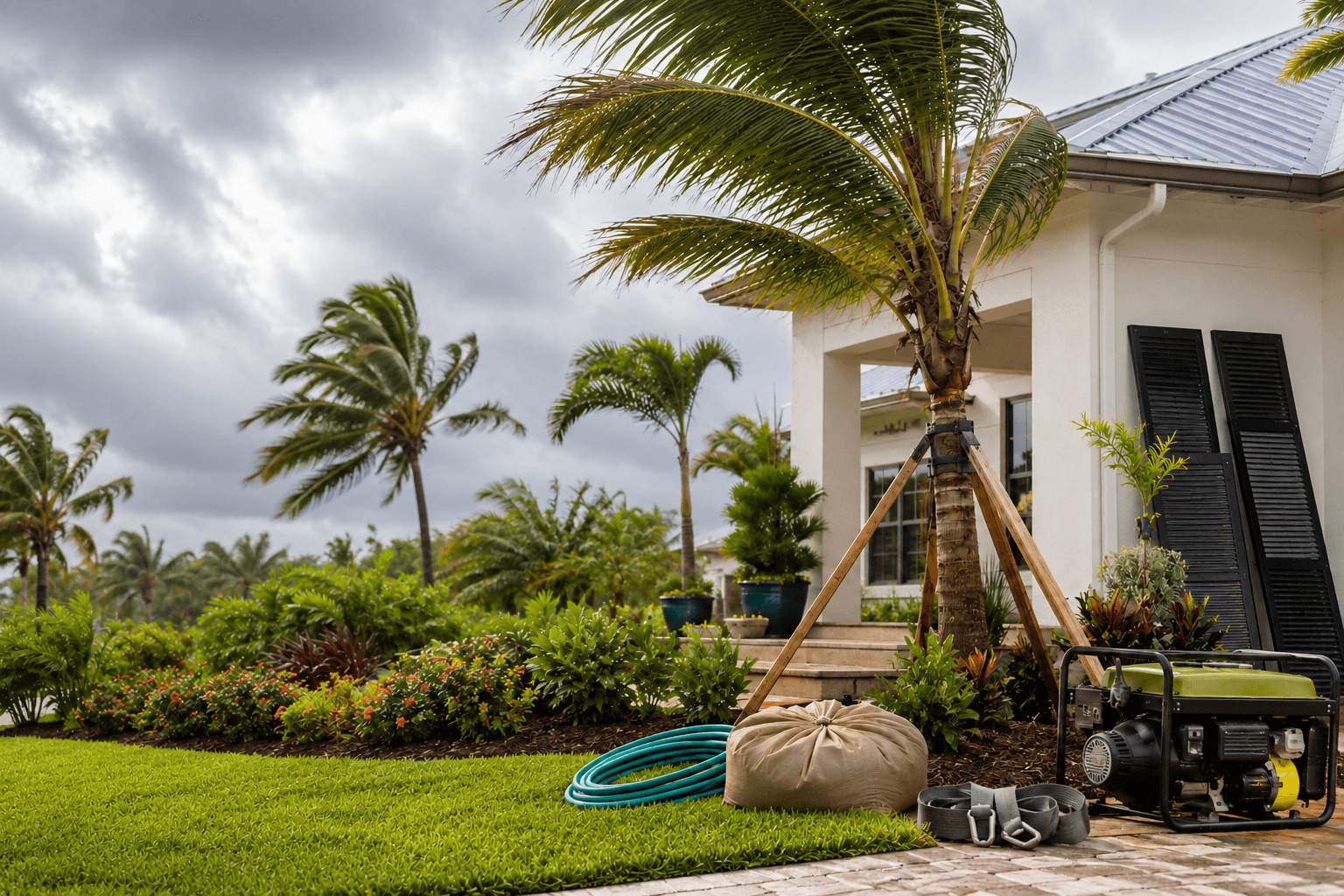
Hurricane prep is most effective when it happens before the season starts, not when a storm is already in the Gulf. By late May or early June, your landscape should already be storm-ready.
Inspect all trees for dead limbs, weak crotches, and signs of decay (mushrooms at the base, hollow trunks, leaning)
Trim deadwood and crossing branches; do not over-thin healthy canopies
Stake any newly-planted trees that have not yet rooted
Clear gutters, downspouts, and yard drains so heavy rain does not pool
Document your landscape with photos for insurance purposes
Identify items that will need to be brought inside or secured (potted plants, pool toys, lawn furniture)
Tree Trimming Done Right
Most homeowners over-trim before storms. Counter-intuitively, an aggressively-thinned tree is more likely to fail in high wind than a properly-pruned one. UF/IFAS research shows that "lion-tailing" (stripping interior branches and leaving foliage only at branch tips) creates a wind-catching parachute that snaps branches off.
Do This
Remove deadwood (anything brittle, brown, or fungus-infested). Thin selectively to break up wind-catching dense foliage. Reduce the height of unbalanced trees. Remove crossing or rubbing branches.
Avoid This
Topping (cutting the entire canopy off at a height) creates dozens of weak regrowth shoots that snap easily. Lion-tailing strips inner foliage and creates the parachute effect. Aggressive thinning of healthy canopies removes the structural support tree branches give each other.
Storm-Resistant vs Storm-Vulnerable Species
Some trees naturally resist hurricanes. Others fail predictably. Knowing what you have helps you prioritize prep.
Sabal palms (Florida state tree, hurricane-tested for centuries)
Live oaks (deep roots, flexible wood)
Bismarck palms (low center of gravity)
Slash pines (tall but flexible)
Sand pines and native scrub species
Laurel oaks (shallow roots, prone to uprooting)
Queen palms (snap-prone at the crown)
Tabebuia and ear-leaf acacia (brittle wood)
Australian pines (now invasive, but still around; massive failure rate)
Old, top-heavy ficus and rubber trees near structures
If your property has multiple species in the storm-vulnerable list, plan replacements over the next few seasons rather than trying to "save" them. We help homeowners across Cape Coral and Fort Myers phase out problem trees as part of landscape installation projects.
When a Storm Is in the Gulf
When NHC issues a watch or warning for SWFL, you have 48 to 72 hours of useful prep time. Use it on these items, not on tree work (which should already be done).
Move all potted plants and outdoor furniture into the garage or against the lee side of structures
Drain irrigation lines and turn off the controller (post-storm power surges can fry it)
Lower pool water by 1-2 inches to provide overflow capacity for heavy rain
Secure or remove any landscape decor (statues, hanging baskets, wind chimes)
Photograph everything for insurance
Top off mulch in beds where heavy rain will erode soil
Post-Storm Triage
After a major storm, the first 72 hours are critical for tree health. Trees that look badly damaged can sometimes be saved if pruned correctly within a few days. Trees that look fine can fail later from hidden root damage.
First 24 Hours
Walk your property only if it is safe. Look for downed limbs blocking exits, leaning trees that could fall on structures, and broken branches hanging in canopies (called "widowmakers" because they fall later in calm weather and seriously injure people). Document damage with photos for insurance before doing any cleanup.
First Week
Remove obvious downed material. Hire a professional tree service for anything large, anything near power lines, or anything requiring a chainsaw at height. Damaged but standing trees can often be saved with corrective pruning, but rushed cuts make things worse. We offer post-storm assessments through our landscape maintenance team if you are unsure.
Insurance and Documentation
Most homeowner policies cover landscape damage from named storms but cap payouts. Get pre-storm photos every May and post-storm photos as soon as it is safe. Save receipts for any tree work, plant replacement, and cleanup. File quickly; insurance backlogs after major storms can run six months or more.
Frequently Asked Questions
Should I cut down my old palm tree before storm season?
How short should I trim shrubs before a hurricane?
Do you offer storm-prep services for HOAs or commercial properties?
Can I save a tree that fell or leaned during a storm?
What does post-storm cleanup typically cost?
Bottom Line
Hurricane prep is mostly about doing the right things in May, not the wrong things in October when a storm is bearing down. Get tree work done early, trim correctly (not aggressively), document for insurance, and triage thoughtfully after the storm passes. The yards that come through SWFL hurricanes best are the ones that were structurally healthy going in, not the ones that got panic-trimmed two days before landfall.
Key Takeaways
Pre-season tree work in May is more effective than panic prep in October
Lion-tailing and topping make trees MORE vulnerable to storm damage
Sabal palms and live oaks are the most reliable storm survivors in SWFL
Document landscape every May with photos for insurance purposes
Post-storm: focus on safety first, then triage, then long-term restoration