Most homeowners assume spring is when you plant. That holds true in northern climates, where winter cold has just released the soil and the growing season is short. Southwest Florida runs on a different calendar. Our growing season is essentially year-round, our coldest month is January, and the brutal stress on a new plant is summer heat plus drought, not cold. Plant in spring here and your new shrubs and trees spend their first three months trying to establish roots while temperatures hit the 90s and irrigation has to do all the watering work. Plant in October instead, and those same plants get five to six months of cool, moist root development before summer arrives. We have been planting Lee County landscapes since 1986, and fall is consistently the season when installations succeed.
The Soil Temperature Math
Plants establish through their roots, not their leaves. Root growth happens fastest when soil temperatures are between 60 and 80 °F. Below 60, growth slows. Above 85, root tips can burn and roots stop pushing into new soil.
In Cape Coral and Fort Myers, soil temperatures typically run in the optimal 60 to 80 range from mid-October through April. May through September, soil temperatures climb past 85 and stay there. A new plant installed in October has roughly six months of perfect rooting weather. A new plant installed in May has maybe two weeks before soil heat starts working against it.
Rainfall Cycles
SWFL has a clear wet season (June through September) and dry season (October through May). Counter-intuitively, the dry season is better for new installations because rainfall is more predictable. During the wet season, daily afternoon thunderstorms drown beds, wash mulch into pools, and waterlog roots that have not yet established. Lee County's two-day-per-week irrigation restrictions actually make dry-season installs easier, not harder, because you can predict and time watering.
Best Species for Fall Planting
Almost everything we plant performs best in cool months, but a few species are particularly fall-friendly:
Sabal palms and other native palms: cool-season planting nearly eliminates transplant shock
Live oaks and shade trees: roots establish through winter and dormant period before spring leaf-out
Ixora, hibiscus, and tropical flowering shrubs: avoid summer transplant burn
St. Augustine and Bahia sod: cool nights mean less disease pressure during establishment
Crotons and ornamental foliage: cool, dry conditions mean less fungal stress
Native plants like firebush, beach sunflower, and silver buttonwood: thrive on minimal irrigation through dry season
What to Avoid Planting in Fall
A small number of plants prefer warmer-soil installs:
Coconut palms (cold-sensitive in their first year, prefer late spring install)
Bismarck palms and other tropicals from frost-free origins
Most fruit trees other than citrus (mango, avocado prefer May install)
Bedding annuals if a hard freeze is forecast within 10 days of planting
Planting and Establishment Care
Watering Schedule
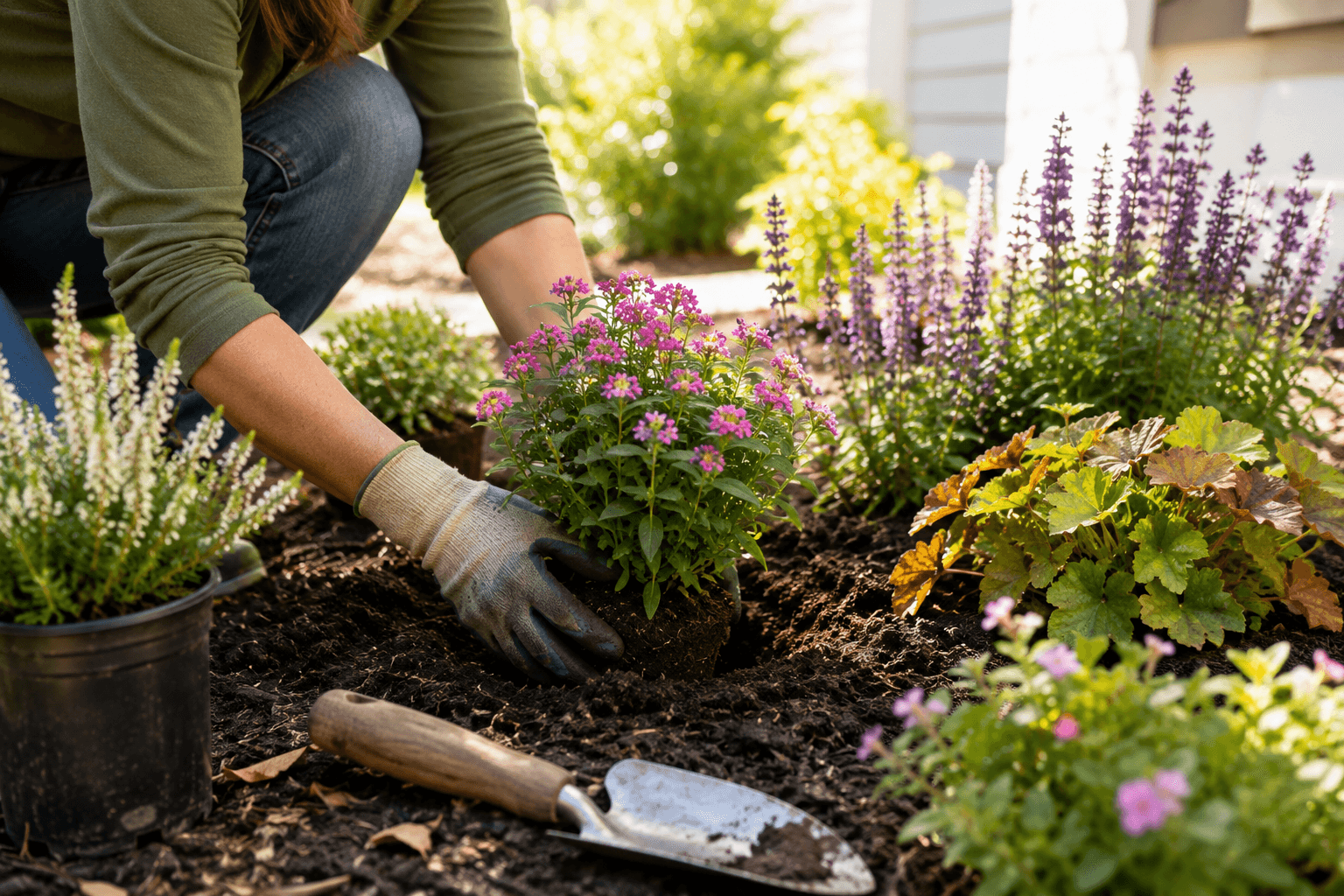
A new plant in October needs water immediately at install, then daily for two weeks, then every other day for a month, then twice a week through the rest of the dry season. By the time wet season starts in June, the plant should be on minimal supplemental irrigation.
Mulch and Bed Prep
Two to three inches of mulch in beds locks in moisture, suppresses weeds, and stabilizes root-zone temperature through occasional cold snaps. Pull mulch back from trunks (mulch volcanoes rot roots). Water deeply rather than frequently to encourage roots to grow downward.
Cold Protection
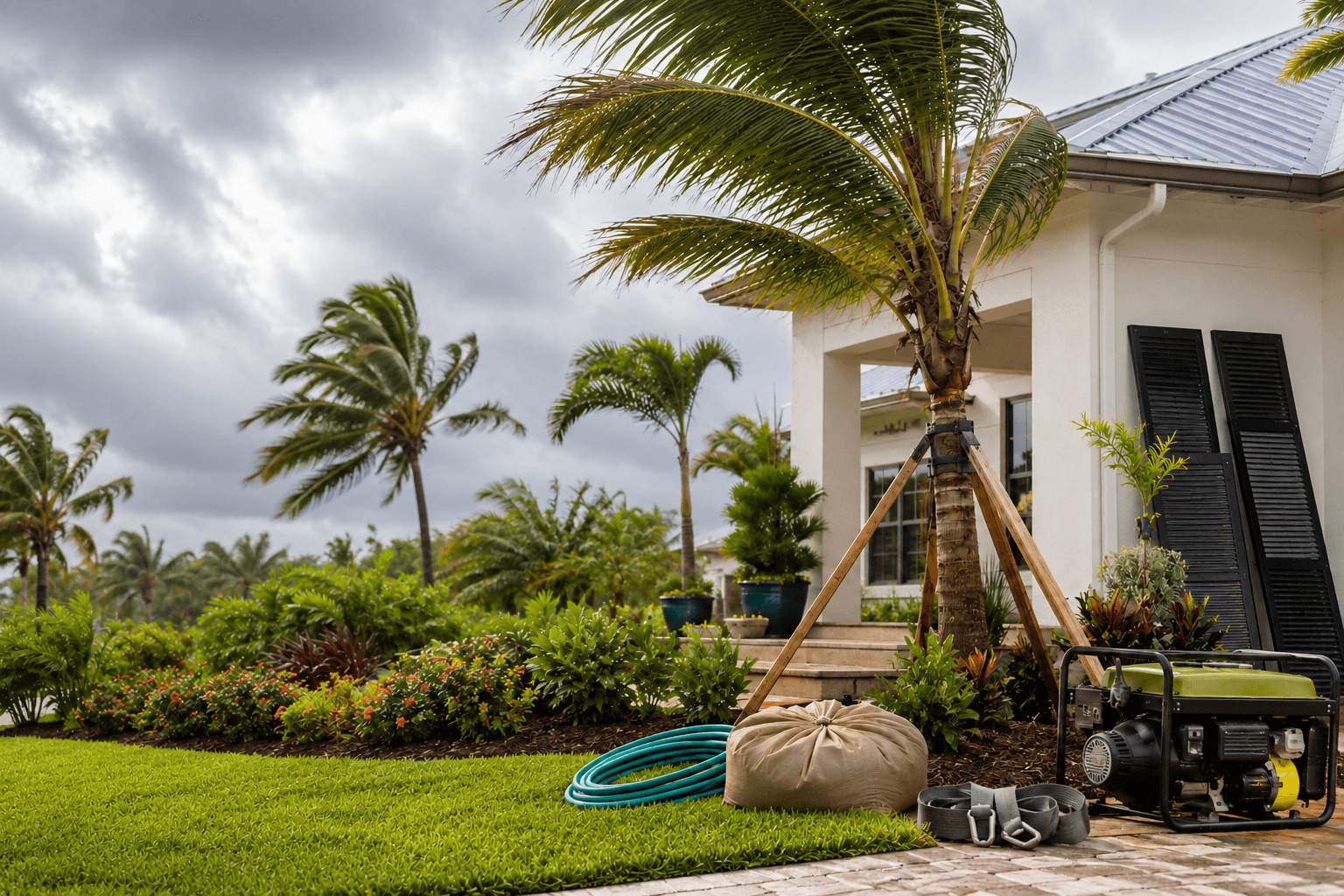
Even fall-planted shrubs and palms benefit from frost cloth on the rare nights below 32 °F. Most years that is one to three nights, typically in late January or early February.
Frequently Asked Questions
Can I plant during summer in Cape Coral?
When does fall planting season start and end in Lee County?
Will my plants slow down or stop growing in winter?
Should I fertilize new plants in fall?
Bottom Line
Fall planting in Southwest Florida is not a niche choice; it is the textbook right answer for almost everything you would put in your yard. Soil is cool, rain is predictable, and your new plants get half a year of low-stress establishment before summer arrives. If you have a project on your mind, the calendar between October and February is when you want it in the ground.
Key Takeaways
Optimal soil temperature for root growth (60-80 °F) hits Lee County mid-October through April
Dry-season installs avoid waterlogging that wet-season storms cause
Most species thrive in fall installs; only true tropicals like coconut palms prefer spring
Plan for two weeks of daily watering, then a tapering schedule through wet season
Frost protection on the rare nights below 32 °F is the only real cold-related concern