Florida’s summer pest pressure is unlike anywhere else in the continental US. Chinch bugs can wipe out a St. Augustine lawn in two weeks if untreated. Sod webworms emerge with the rainy season and chew through entire lawns overnight. Mole crickets undermine root systems while you sleep. And mosquitoes breed in any standing water on your property and your neighbors’, making outdoor evenings miserable from May through October. We run pest, mosquito, and fertilization programs across Cape Coral, Fort Myers, and the rest of Lee County, and the playbook is the same: identify early, treat correctly, prevent next time.
Chinch Bugs (St. Augustine’s Worst Enemy)
Chinch bugs are tiny (about an eighth of an inch) black insects with white wings that suck juice from St. Augustine grass blades. They love hot, dry, sunny patches and can completely kill a lawn area in 10-14 days if untreated.
Identification
Look for irregular patches of yellow turning to brown grass, usually near sidewalks, driveways, or sunny edges. The patches look almost like drought stress at first. Pull back the grass at the edge of a damaged patch; if you see small black insects scurrying, you have chinch bugs.
Treatment
Insecticides labeled for chinch bug control (active ingredients like bifenthrin or imidacloprid) work when applied at the right life stage. Timing matters: chinch bugs are most vulnerable as nymphs in late spring and early summer. Once full damage shows up, you are treating reactively and the lawn needs both pest treatment and rehabilitation.
Sod Webworms
Sod webworms are the larvae of small tan moths you see fluttering around lawns at dusk. The larvae chew grass blades at the base, causing rapid lawn thinning. They emerge with the wet season (typically late June through September) and can devastate a lawn overnight.
Identification
Notched grass blades, irregular brown patches, and small green pellets (frass) at the soil level are the giveaways. If you see small tan moths flying up when you walk through your lawn at dusk, larvae are likely already feeding.
Treatment
Bt (Bacillus thuringiensis) products work on early-stage larvae. More aggressive infestations need pyrethroid insecticides. Treatments are most effective at sunset when larvae move to the surface to feed.
Mole Crickets
Mole crickets tunnel through lawn root zones, causing soft, spongy turf and visible surface tunnels (raised wandering ridges). They prefer Bahia and Bermuda grass but attack all SWFL turf species.
Soft, spongy spots when you walk on the lawn
Visible raised tunnels just under the surface
Areas of grass that pull up easily because roots are severed
Increased bird activity (especially mockingbirds) hunting the crickets
Treatment timing matters more than product choice. Apply granular insecticides labeled for mole crickets in late June or early July, when adults are laying eggs and small nymphs are most vulnerable. Treat after a rain or irrigation cycle so the product penetrates to the soil where crickets live.
Fire Ants
Fire ants are non-negotiable for any SWFL lawn program. Visible mounds appear within weeks of new sod installation and rebuild within days of a treatment. They sting people, pets, and damage irrigation by tunneling around heads.
Two-Step Approach
Effective fire ant control combines (1) a granular bait broadcast across the entire lawn (workers carry it to the queen) and (2) individual mound treatments for active visible mounds. Either alone is incomplete. We treat fire ants as a year-round component of pest programs because of how fast they reinvade.
Mosquito Control
Mosquitoes in Lee County come from standing water on your property and your neighbors’. Even a bottle cap of water can host larvae. The two-pronged approach is source reduction (eliminate standing water) plus barrier treatments (insecticide applied to resting harborage areas).
Source Reduction
Empty bird baths twice a week. Drill drainage holes in plant pot saucers. Treat ponds and pool covers with mosquito dunks. Clean gutters every few months. Fix any low spots in the yard that hold water for more than 48 hours.
Barrier Treatments
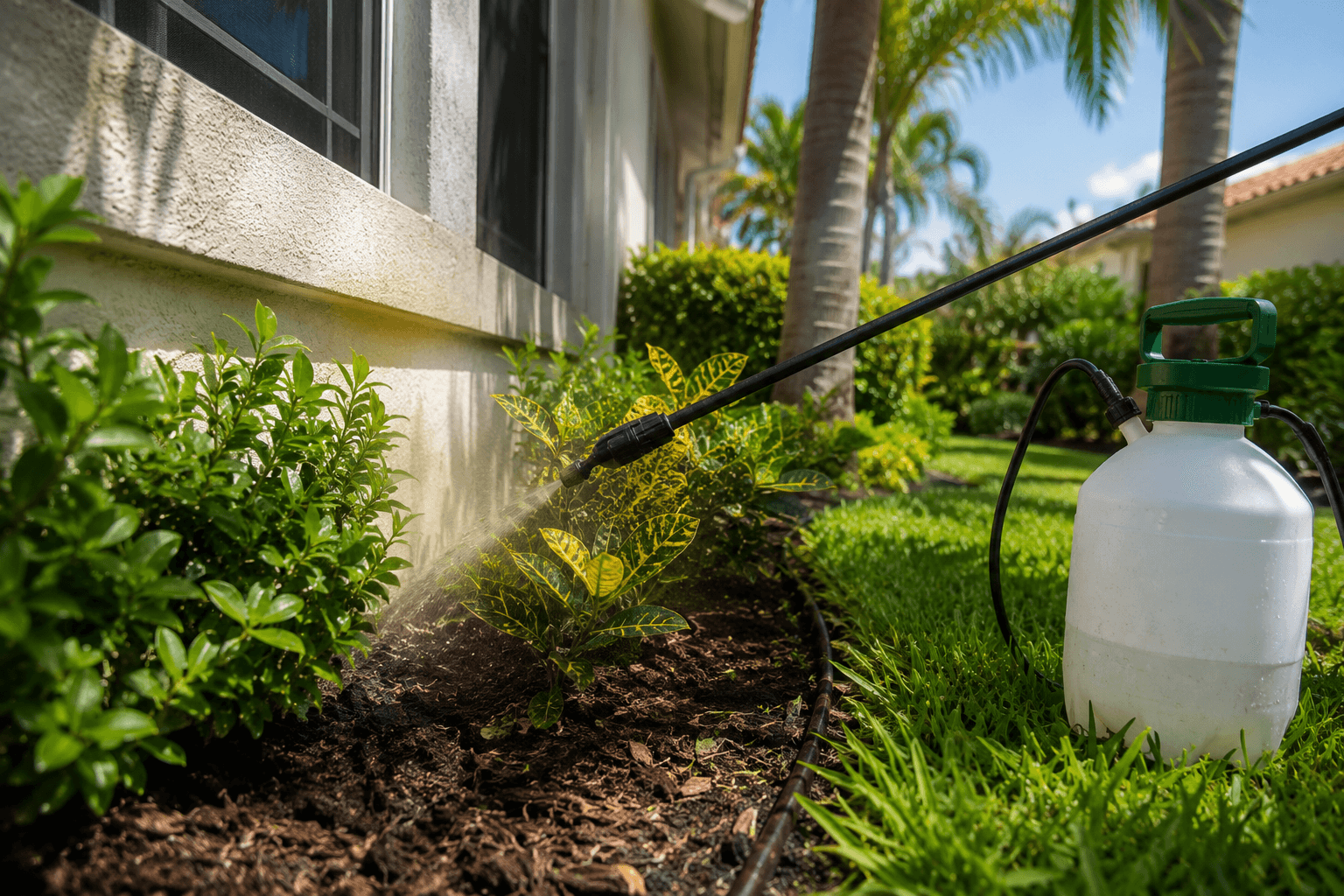
Insecticides applied to shaded resting areas (under shrubs, behind structures, beneath leaf canopies) on a 3-4 week cycle dramatically reduce adult mosquito populations. Properties near canals, wetlands, or wooded edges benefit most. Mosquito misting systems are an option for high-end properties wanting set-and-forget control.
When to Call a Professional
Florida law requires a state license to apply restricted-use pesticides for hire. DIY products from big-box stores work for spot treatments and prevention but are typically less effective than what professional applicators use. The case for hiring a pro:
Damage covers more than 20% of your lawn
You’ve treated twice and the problem returned
You have pets or kids and want products applied per EPA labels by trained applicators
You are renting, selling, or in an HOA where documented professional treatment is required
You want a year-round program rather than reactive treatments
Our pest, mosquito, and fertilization program covers all four major summer pests on a quarterly schedule, plus year-round mosquito treatments, with all applications by Florida-licensed technicians using EPA-compliant products.
Frequently Asked Questions
How often should mosquito treatments be applied?
Are pest control treatments safe for my pets and children?
Will pest control kill beneficial insects too?
How much does a year-round pest program cost in Cape Coral?
Can I do my own pest control?
Bottom Line
SWFL summer pest pressure is real and predictable. The four big threats (chinch bugs, sod webworms, mole crickets, fire ants) plus mosquitoes follow consistent patterns and respond well to scheduled, targeted treatments. The mistake homeowners make is reactive: waiting until visible damage appears, then treating once. Preventive scheduled programs cost less and produce better lawns.
Key Takeaways
Chinch bugs target sunny St. Augustine patches and need late-spring treatment
Sod webworms emerge with rainy season and respond to evening Bt applications
Mole crickets are best treated in late June or early July as nymphs are establishing
Fire ants require both broadcast bait and individual mound treatments
Mosquito control combines source reduction with barrier treatments every 3-4 weeks