Irrigation in Southwest Florida is regulated, technical, and unforgiving of bad design. Lee County limits residential watering to two days per week. Sandy soil drains in minutes. Salt spray corrodes hardware near canals. And if your system runs on the wrong day or wastes water, you can get a code-compliance citation. We design and install irrigation systems across Cape Coral and Fort Myers, and the right system for your property depends on more variables than most homeowners realize. Here is the plain-English breakdown.
Three Types of Sprinkler Heads
A typical residential system uses one or more of three head types, each suited to different coverage areas:
Spray Heads
Pop-up heads that throw a fixed pattern (quarter, half, full circle, strip) over a small area. Ideal for narrow strips, small turf zones, and bed edges. Standard radius 5-15 feet. Cheap to install but inefficient at long throws; high precipitation rate so they finish a watering cycle in 10-15 minutes.
Rotor Heads
Pop-up heads that rotate slowly, throwing a stream that sweeps an arc. Cover larger areas (radius 25-50 feet). More water-efficient than spray heads for big turf zones because the slower precipitation rate gives water time to soak in rather than runoff. Use rotors for any turf zone bigger than about 20x20 feet.
Drip Irrigation
Tubing with emitters that deliver water directly at the root zone. Up to 90% efficient (vs 60-70% for sprays and rotors). Ideal for plant beds, tree wells, vegetable gardens, and any spot where overhead watering wastes water on hardscape or evaporation. Required by some HOAs in Cape Coral for non-turf areas.
Smart Controllers
A smart controller is the brain that decides when, how long, and which zones run. Old timer controllers run on a fixed schedule regardless of weather. Smart controllers (Hunter Hydrawise, Rain Bird ESP-TM2 with WiFi, Rachio 3) adjust schedules based on:
Local weather data (skip watering after rain)
Soil moisture sensors (skip when ground is already wet)
Seasonal evapotranspiration (water more in May, less in February)
Lee County restriction calendars (run only on allowed days)
Wind conditions (skip cycles that would waste water on windy days)
Smart controllers cut water use 20-50 percent versus traditional timers, depending on baseline efficiency. The payback period is usually 2-3 years on the smart controller upgrade. They also dramatically reduce the chance of getting a watering-restriction citation.
Lee County Watering Restrictions
Lee County restricts residential irrigation to two days per week, with allowed hours typically 12 AM to 10 AM. Your address determines which days. Even-numbered houses water on certain days; odd-numbered on others. New construction has different first-year rules. Restrictions tighten during drought conditions.
Designing around these restrictions means: (1) zones must be sized so the lawn gets enough water in just two cycles per week, (2) controllers must be programmed for the allowed hours, and (3) all of this needs to update if your address gets reassigned to a different day group. We program every smart controller install with the current Lee County calendar and update it when rules change.
Backflow Prevention and Sensors (Code Requirements)
Florida law requires backflow prevention testing on most residential irrigation systems annually (FAC 62-555.360). The backflow device prevents irrigation water from contaminating the potable supply. Florida Statute 373.62 also requires rain sensors on systems built after 1991. Both are inexpensive but commonly missed by DIY installs and even some unlicensed contractors.
When we install or service systems, we test backflow, install rain sensors, and file the paperwork with the county. Customers who buy from us never get caught by a code-enforcement letter for these.
System Design by Property Type
Standard Cape Coral Lot (1/4 Acre)
Typical setup: 6-10 zones, mix of spray heads for tight strips and rotors for the main turf areas, drip lines for plant beds, smart Wi-Fi controller, rain sensor, backflow valve. Repair-to-replace decisions on older systems usually favor replacement once you exceed 3-4 zone failures. We send free written estimates after walking the property.
Canal-Front or Coastal Properties
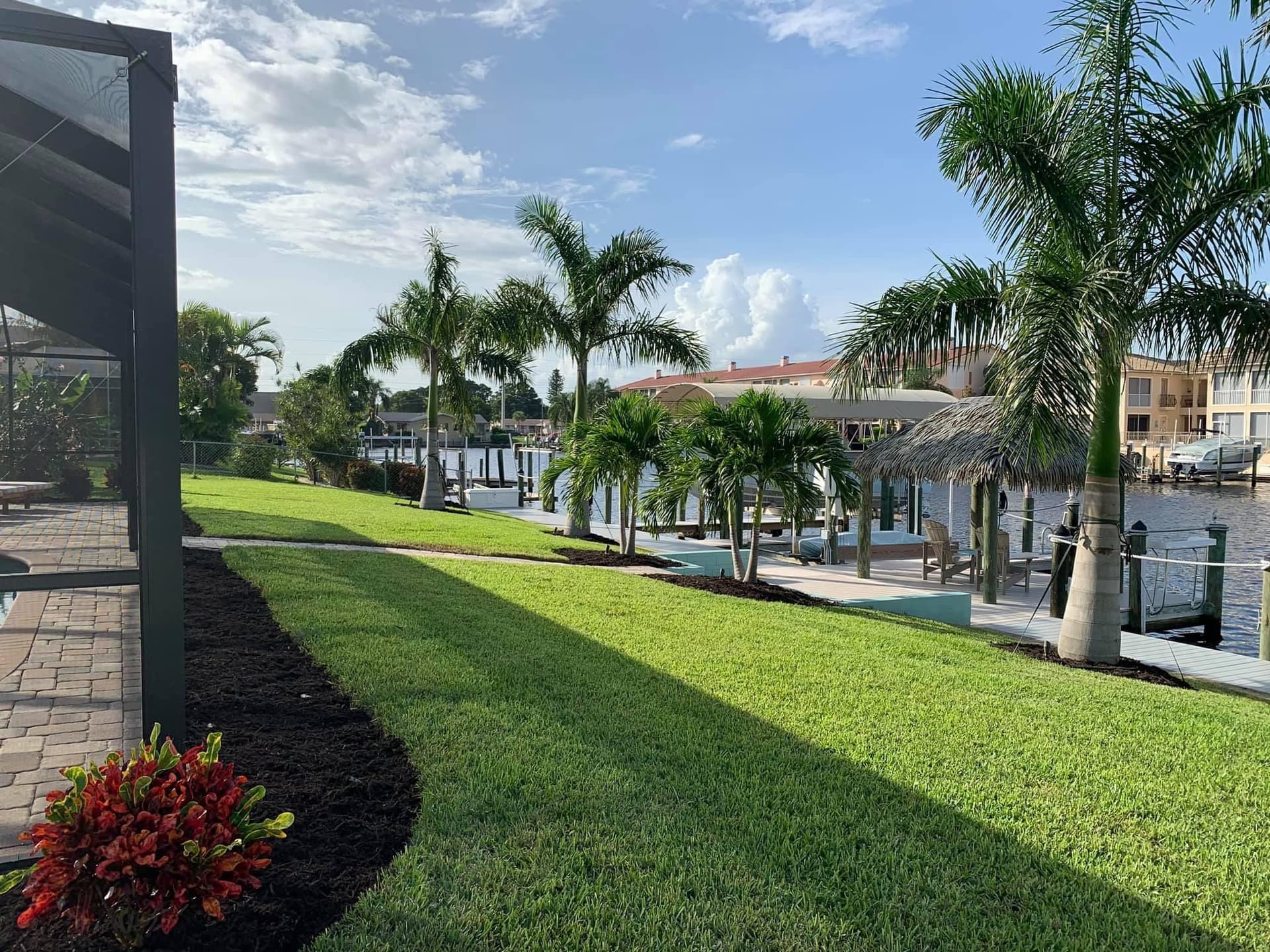
Salt accelerates corrosion. Use brass or stainless heads instead of plastic where possible. Backflow devices need annual inspection. Drip emitters in coastal beds need salt-tolerant emitter cleaning a couple times a year. Otherwise the design rules are the same.
New Construction
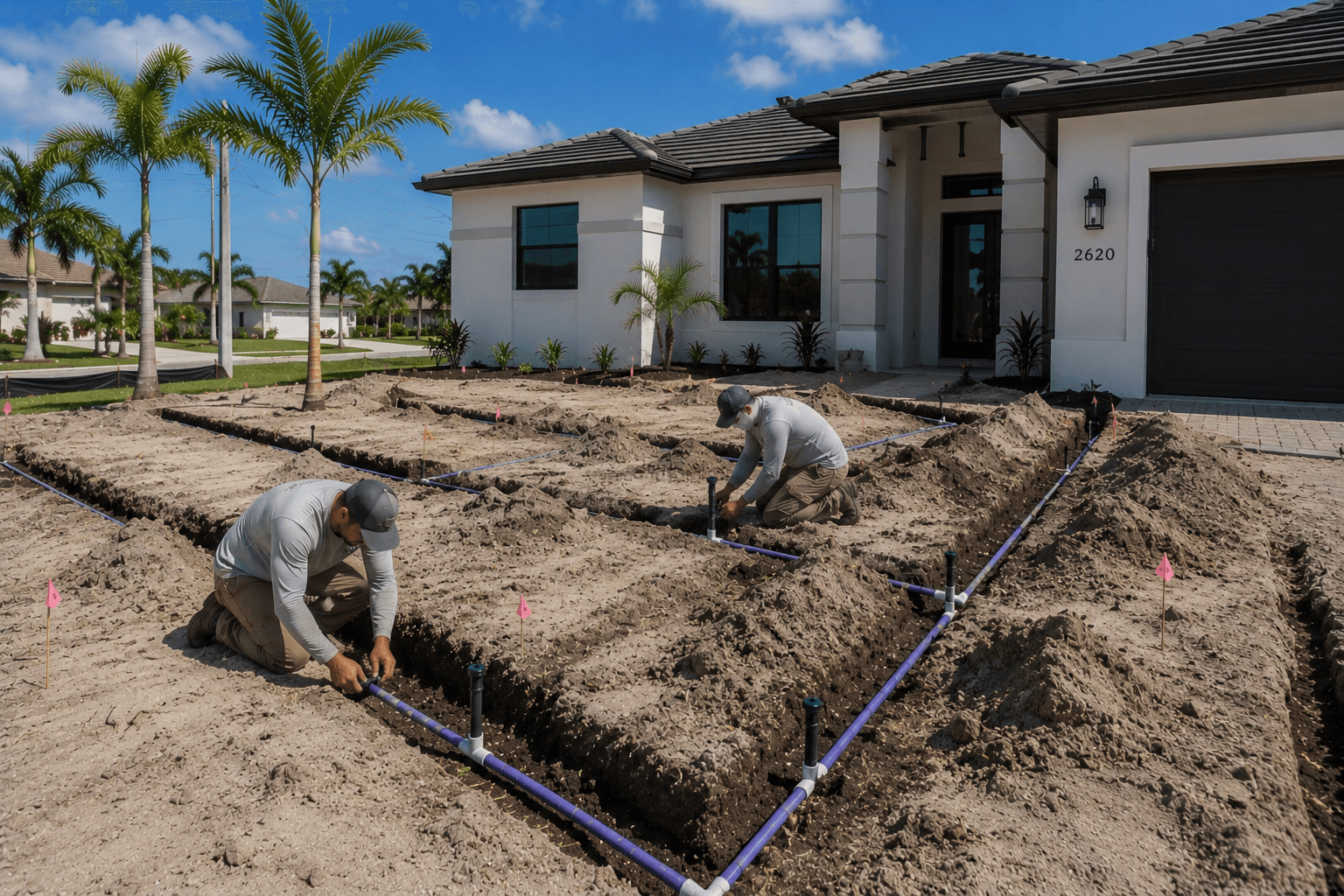
Builder-installed systems are often minimum-spec to meet code. Most need significant upgrades within five years (more zones, smart controller swap, drip additions to new beds). We work directly with builders on Pine Island Road and Burnt Store corridors and can install upgraded systems at the new-construction phase for less than a retrofit later. Read more on our Cape Coral page.
Common Problems and Repairs
Broken sprinkler heads (lawnmowers, edgers, vehicles)
Stuck valves (mineral buildup, debris)
Cracked PVC laterals (root pressure, ground settling, freezing in extreme cold)
Failed solenoids on valve manifolds (electrical or coil failure)
Controller failures (lightning, battery, age)
Rain sensor failures (clog with debris, requires annual cleaning)
Most service calls are completed the same day. Total system replacements are uncommon if the underlying PVC laterals are intact; usually we replace controllers, valves, and surface heads while keeping the original pipe network.
Frequently Asked Questions
How much does a new irrigation system cost in Cape Coral?
How much water can a smart controller actually save?
Why did I get a watering restriction citation?
Should I run my system manually after a heavy rain?
How long does an irrigation system last?
Bottom Line
A well-designed irrigation system in SWFL pays you back in water savings, healthier landscapes, and avoided code violations. The right design is matched to your property type, uses smart controllers to handle restriction calendars automatically, and includes the backflow + rain sensor compliance items most DIY installs miss. The wrong system is a series of patches over the years; the right system is a 10-year set-and-forget asset.
Key Takeaways
Three head types (spray, rotor, drip) match different coverage needs; most properties use a mix
Smart controllers cut water use 20-50% and prevent restriction citations
Lee County requires backflow testing annually and rain sensors on systems post-1991
Salt-air properties need brass/stainless hardware; coastal cleaning matters
Smart controller upgrades typically pay back in 2-3 years through water bill savings