Native plants are not just trendy; they are practical. A plant that evolved in Lee County’s sandy soil, hot summers, and salt-air doesn’t need the irrigation, fertilizer, and pest treatments that exotic ornamentals demand. The Florida-Friendly Landscaping (FFL) program at UF/IFAS has built decades of research showing that native and Florida-friendly species cut water use by 30 to 50 percent versus traditional landscape palettes. We use natives heavily in installations across Cape Coral and Fort Myers, especially for HOAs and homeowners who want low-maintenance results. Here are eight that consistently perform.
1. Sabal Palm (Sabal palmetto)
Florida’s state tree and the most reliable palm in SWFL. Sabal palms tolerate full sun, partial shade, salt spray, drought, and hurricane winds. Mature height is 40-60 feet. They cost less than imported palms and need essentially zero post-establishment care. Use them as accents, in groups of three, or as street trees.
2. Beach Sunflower (Helianthus debilis)
A low-growing perennial groundcover with bright yellow daisy-like flowers nearly year-round. Native to Florida coastal dunes; it thrives in pure sand, full sun, and salt air. Spreads to fill beds and replaces lawn in difficult sandy areas. Drought-tolerant once established.
3. Firebush (Hamelia patens)
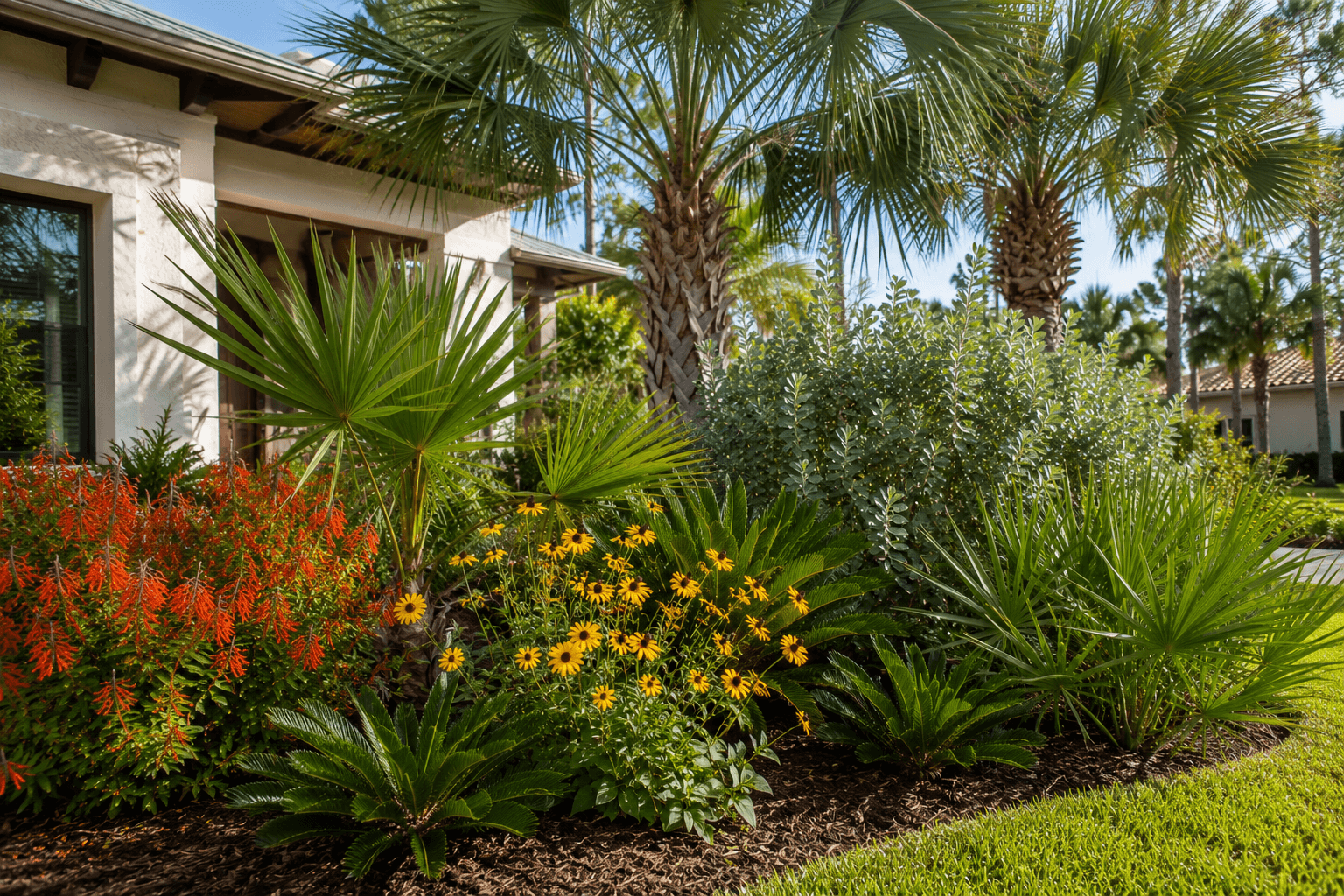
A native flowering shrub with red-orange tubular flowers that bloom continuously from spring through fall. Hummingbirds and butterflies love it. Grows 6-12 feet tall, tolerates full sun to part shade, and handles cold snaps down to about 25 °F. Excellent for Florida-Friendly hedges and bird gardens.
4. Silver Buttonwood (Conocarpus erectus var. sericeus)
A shimmering silver-leaved tree or large shrub. Native to coastal Florida and famously salt-tolerant. Often used along seawalls and canal-front properties in Cape Coral and Fort Myers Beach. Can be pruned as a hedge or grown as a specimen tree to 20-40 feet.
5. Coontie (Zamia integrifolia)
A slow-growing, low-maintenance cycad native to Florida. Looks like a small palm-fern hybrid. Drought-tolerant, deer-resistant, salt-tolerant. Grows to 3-4 feet, prefers part shade but tolerates sun once established. Hosts the rare Atala butterfly. A staple of Florida-Friendly landscapes.
6. Muhly Grass (Muhlenbergia capillaris)
A native ornamental grass with stunning pink-purple plumes in fall. Grows 2-4 feet tall, drought-tolerant, full sun, and tolerates poor sandy soil better than almost any ornamental grass. Spectacular in mass plantings or as a meadow alternative.
7. Saw Palmetto (Serenoa repens)
Native shrubby palm that thrives across Lee County. Hurricane-tested, fire-tested, drought-tested. Grows 3-6 feet tall and spreads slowly. Use as a low understory plant or naturalize in larger areas. Wildlife magnet (gopher tortoises, birds, bees).
8. Florida Privet (Forestiera segregata)
A native shrub or small tree with dense foliage that’s an excellent privacy hedge alternative to invasive Brazilian pepper or non-native ligustrum. Tolerates pruning, salt, drought. Use as a 6-10 foot privacy hedge or let grow as a small tree to 15-20 feet.
Why Natives Beat Exotics in Lee County
Drought-tolerant: usually thrive on rainfall alone after establishment
Salt-tolerant: most natives evolved with coastal conditions
Pest-resistant: native pests evolved alongside; balance is built-in
Low fertilizer needs: tolerate sandy soil without supplementation
Wildlife-friendly: feed and host native birds, butterflies, bees
Less HOA pushback: most HOAs accept FFL plant lists
Where Natives Don’t Fit
Native plants are excellent landscape components, but they are not always a complete answer. Formal homes with traditional plantings (boxwood, ligustrum, ixora) often look out of place if natives are forced into the design. The right approach is integration: keep formal beds where they work, swap out failing exotic shrubs for native equivalents, and use natives heavily in beds, edges, and naturalized areas. Most of our customers end up with 40-60 percent natives mixed with hardy non-native ornamentals like bougainvillea and crotons.
Sourcing Native Plants in Cape Coral
Our retail and wholesale nursery at 425 SW Pine Island Road carries most of the species above year-round, from Florida-grown stock that’s already acclimated to SWFL conditions. The Florida Native Plant Society and the UF/IFAS Lee County Extension also maintain lists of recommended natives and where to source them.
Frequently Asked Questions
Do native plants require irrigation?
Are native plants HOA-friendly?
Do natives attract pests?
Can natives replace my entire lawn?
How much does a native landscape cost compared to traditional?
Bottom Line
Native plants are not a sacrifice in beauty for the sake of sustainability. The eight species above plus dozens of others produce yards that look like they belong in Florida, attract wildlife, cost less to maintain, and survive whatever weather throws at them. Used thoughtfully alongside well-chosen non-natives, they form the backbone of low-maintenance SWFL landscapes.
Key Takeaways
Sabal palm, beach sunflower, firebush, silver buttonwood, coontie, muhly grass, saw palmetto, and Florida privet are the eight native MVPs for Lee County
Natives cut water use 30-50% and fertilizer needs significantly
HOAs cannot ban Florida-Friendly designs in most cases (Florida HB 145)
Sourcing matters: buy from accredited Florida nurseries to ensure plants are actually native and not lookalikes
Best results come from integration with hardy non-natives, not 100% native conversions