Florida citrus is iconic, but planting a citrus tree in Cape Coral is not a guaranteed success. Citrus greening disease (HLB), Florida’s strict propagation rules, and our particular soil-and-rain combination all shape what works and what fails. We stock citrus year-round at our Cape Coral nursery and have helped homeowners across Lee County grow productive citrus trees for nearly four decades. Here is what actually works.
Best Citrus Varieties for Lee County
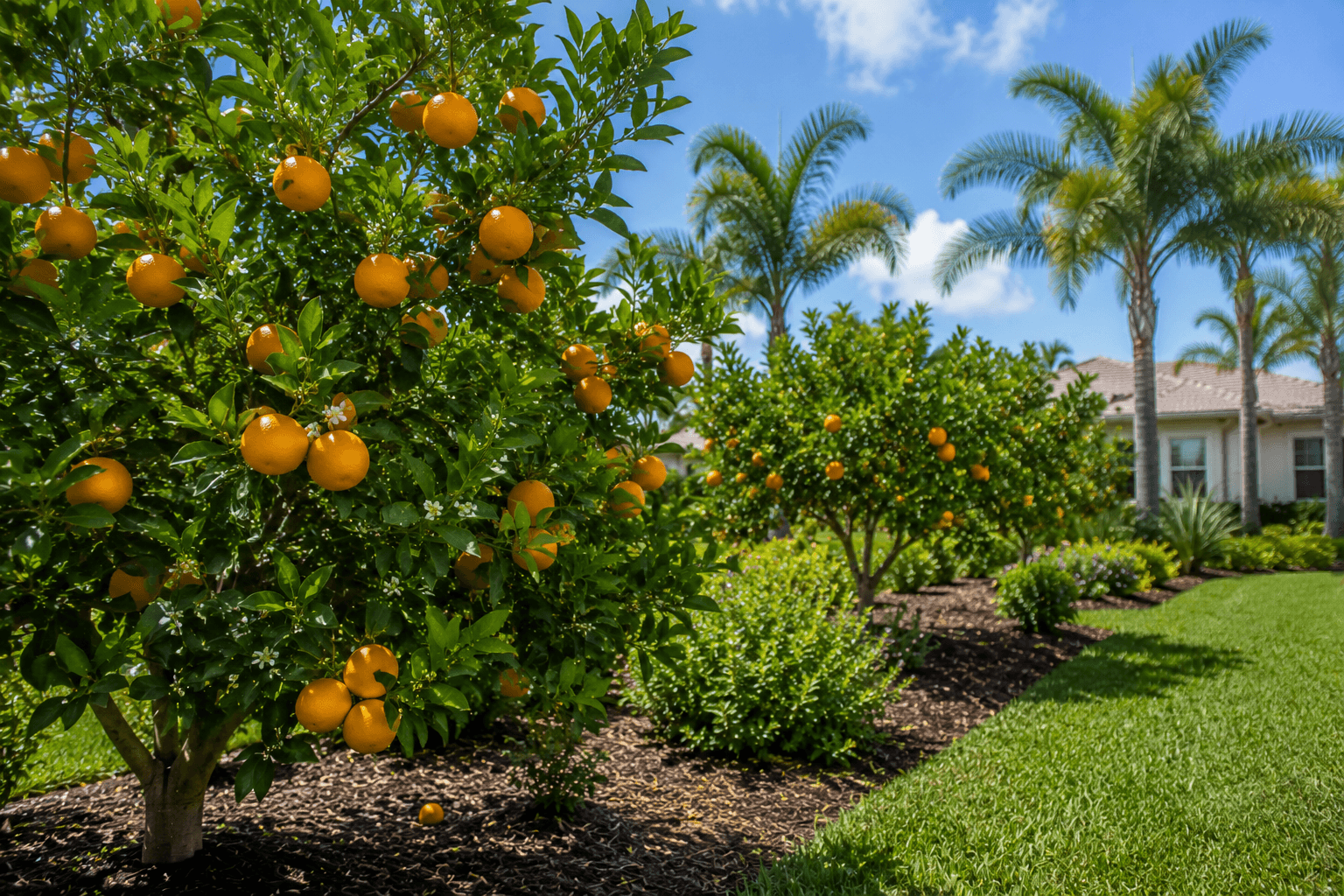
Several varieties consistently produce well in SWFL conditions:
Meyer Lemon: smaller tree (8-12 ft), heavy producer, sweeter than standard lemons, cold-tolerant to about 28 °F
Key Lime: tropical, smaller fruit, heavy producer, more cold-sensitive (needs protection below 32 °F)
Navel Orange: classic eating orange, vigorous tree to 15-20 ft, produces November-March
Hamlin Orange: juice-quality fruit, early-maturing, good for Cape Coral home growers
Ruby Red Grapefruit: large tree to 20-25 ft, prolific, December-April harvest
Persian (Tahiti) Lime: seedless, year-round bearing, more cold-hardy than Key lime
Calamondin: heavy producer of small tart fruit, ornamental and edible, very low-maintenance
Why Florida Certification Matters
Florida law requires that all citrus sold be certified disease-free by FDACS to prevent the spread of citrus greening (Huanglongbing or HLB). Reputable nurseries comply automatically. Buying citrus from roadside sellers, online sources outside Florida, or unlabeled stock is illegal and dramatically increases the risk of bringing HLB into your yard.
Our citrus stock is sourced from Florida-certified growers, comes with the required state inspection tags, and is acclimated to SWFL conditions. If you buy elsewhere, look for the FDACS certification tag on the container before you take a tree home.
Where to Plant Citrus
Sun and Wind
Full sun (6+ hours direct daily). South-facing aspects are best. Avoid low-lying spots that hold water; citrus roots rot in waterlogged soil. Wind protection from afternoon thunderstorms helps young trees establish.
Spacing
Standard citrus needs 15-20 feet from structures and other trees. Dwarf varieties tolerate 10-12 feet. Crowded plantings produce smaller, lower-quality fruit and are harder to spray and harvest.
Soil Prep
Cape Coral’s sandy soil is well-drained but nutrient-poor, which actually suits citrus. The mistake is amending too heavily; instead, let citrus root into the native soil and supplement with proper fertilization rather than rich planting mixes that retain too much water.
Planting Steps
Plant October through April for best establishment (see our [fall planting guide](/blog/fall-planting-guide-swfl))
Dig the hole twice as wide as the root ball, no deeper than the container
Set the tree so the graft union is at least 6 inches above soil grade
Backfill with native soil; do not amend heavily
Water in deeply, then daily for 2 weeks, every other day for a month, weekly for 6 months
Mulch 2-3 inches deep, kept 6 inches from the trunk
Year-One Care
The first year is when most homeowners lose citrus trees. The most common mistakes are over-fertilization (citrus prefers steady light feeding, not heavy applications) and inconsistent watering during establishment.
Fertilization
Light applications of citrus-specific fertilizer (typically 6-6-6 or 8-8-8 with micronutrients) every 6-8 weeks during the first growing season. Florida’s sandy soil leaches nitrogen quickly, so frequent small applications outperform infrequent heavy ones. After year one, three feedings per year (Feb, May, Aug) are sufficient.
Pruning
Light pruning only in the first year. Remove suckers from below the graft, dead wood, and crossing branches. Heavy structural pruning can wait until year three or four. Citrus generally wants a low, dense canopy rather than a tall thin one.
Cold Protection
Most citrus tolerates brief cold to about 28 °F. On rare nights below 32 °F (1-3 nights per year in Cape Coral), young trees benefit from frost cloth and watering the soil deeply the day before (wet soil retains heat). Older established trees usually shrug off light frosts.
Common Problems
Citrus Greening (HLB)
The most serious citrus disease in Florida. Spread by the Asian citrus psyllid. Symptoms include yellow-vein blotching on leaves, lopsided bitter fruit, and gradual tree decline. There is no cure. Prevention is buying certified stock and controlling psyllids when they appear. Suspected HLB should be reported to FDACS.
Mineral Deficiencies
Yellowing leaves with green veins (interveinal chlorosis) usually indicates iron, manganese, or magnesium deficiency in our sandy soil. Citrus-specific fertilizer with micronutrients fixes most cases.
Pests
Citrus leafminer, scale, and aphids are common but rarely catastrophic. Asian citrus psyllid is the disease vector and worth treating proactively. Most citrus pests can be managed with horticultural oil applications or spot treatments. Our pest control program covers fruit-tree pest management for customers who want it bundled.
Where to Buy Citrus in Cape Coral
Our retail and wholesale nursery at 425 SW Pine Island Road carries the varieties above year-round, all from Florida-certified growers. Stop by to walk the yard and pick a tree, or contact us if you have a specific variety request.
Frequently Asked Questions
How long until a new citrus tree starts producing fruit?
Can I grow citrus in a pot?
Why are my citrus leaves yellowing?
How often should I water a mature citrus tree?
Are citrus trees affected by salt?
Bottom Line
Lee County is excellent citrus country if you start with certified stock, plant in fall, and let trees establish in our native sandy soil with steady light feeding. Avoid over-watering, over-fertilizing, and roadside untagged stock. With those three rules followed, a citrus tree in Cape Coral will give you fruit for 20-30 years.
Key Takeaways
Meyer lemon, Persian lime, navel orange, and ruby red grapefruit are the most reliable home varieties
Florida law requires FDACS-certified citrus stock; never buy from roadside or out-of-state sellers
Plant October-April, full sun, well-drained native soil, no heavy soil amendments
Light frequent fertilization beats heavy infrequent feedings in our sandy soil
Citrus greening (HLB) is the major disease threat; control psyllids and start with certified stock