The storm has passed and your yard does not look like your yard anymore. Before you pick up a chainsaw or start dragging limbs to the curb, slow down for an hour. The first decisions you make after a hurricane in Southwest Florida drive both your safety and how much of your landscape you actually get to keep.
If you read our companion post on hurricane season prep, you already know a lot of the recovery outcome is decided before the storm ever forms. This post is about the other side: what to do, and what not to do, in the hours, days, and months after landfall.
First 24 to 48 hours: safety
Treat this window as triage, not cleanup. FEMA and OSHA are consistent on what matters here.
Stay at least 10 feet away from any downed power line. Treat every downed line as energized, even if it looks dead and the power is out on your street. Do not let a line touch water, a vehicle, a fence, or a tree you are working near. Report it to your utility immediately.
Do not step into standing water if a downed line is anywhere in it or near it. Water carries current well beyond the visible wire.
Do not try to move a tree, limb, or branch that is resting on a power line, transformer, or service drop. That is a utility job. Wait for the conductor to be de-energized and cleared before any cutting.
Some jobs are simply not homeowner jobs, even without a live wire in the mix. A tree leaning on a house, garage, or a neighbor's structure needs an insured crew with rigging. Same with hanging branches caught in a canopy (arborists call these "widow makers") and any trunk with a split or major crack. FEMA also flags leaning trees and utility poles as a common secondary hazard right after flooding, so keep an eye up while you walk the property.
First week: damage assessment
Once the immediate hazards are handled, wait a few days before making big calls on individual trees and plants. A lot of the real damage does not show up right away.
Trees
UF/IFAS treats a tree that has fallen or is leaning at less than a 45 degree angle from horizontal as a non-survivor. Past that lean, the root plate has failed and you are looking at removal.
Realistic candidates for staking back upright are recently planted trees or trees with a trunk under 4 inches in diameter. Anything larger that has uprooted or is heavily leaning is usually a removal.
A tree that is otherwise sound can lose up to about three quarters of its small canopy branches and still recover, as long as the trunk and the major scaffold limbs are intact. Broken branches under 4 inches can typically be pruned back to the branch collar and the tree has a fair shot.
Cracks in the trunk or major limbs, weak co-dominant stems, and exposed or lifted roots are usually the difference between a save and a removal.
Pines are a special case. After Hurricane Charley, UF/IFAS found that 27 percent of standing slash pines and 48 percent of standing longleaf pines were dead within three months. A pine that looks fine at the one week mark can still decline. Watch them.
Palms
The single most reliable field check on a palm is the spear leaf. If the spear leaf is intact and expands normally over the following month, the palm is likely fine. A pale or yellow spear right after the storm often greens up in a few days as it finishes developing, and that alone is not a death sentence.
You will hear about pulling on the spear to see if it lifts free. UF/IFAS does not endorse that as a viability test. Their guidance is to watch the spear leaf over weeks, not to tug on it. A single pull can injure a palm that would have recovered on its own.
Unless the trunk is broken or the bud is obviously destroyed (soft crown, foul smell), UF/IFAS says there is no reliable way to predict at the roadside which palms will live. You are watching, not diagnosing.
Sabal palms typically lose very few fronds in a hurricane. Royal palms often shed most of theirs and can still come back, so do not judge a royal by frond count. Expect at least 6 months, often longer, before you know whether a palm will recover, and closer to a year for full canopy replacement. Monitor for 1 to 2 years on borderline cases.
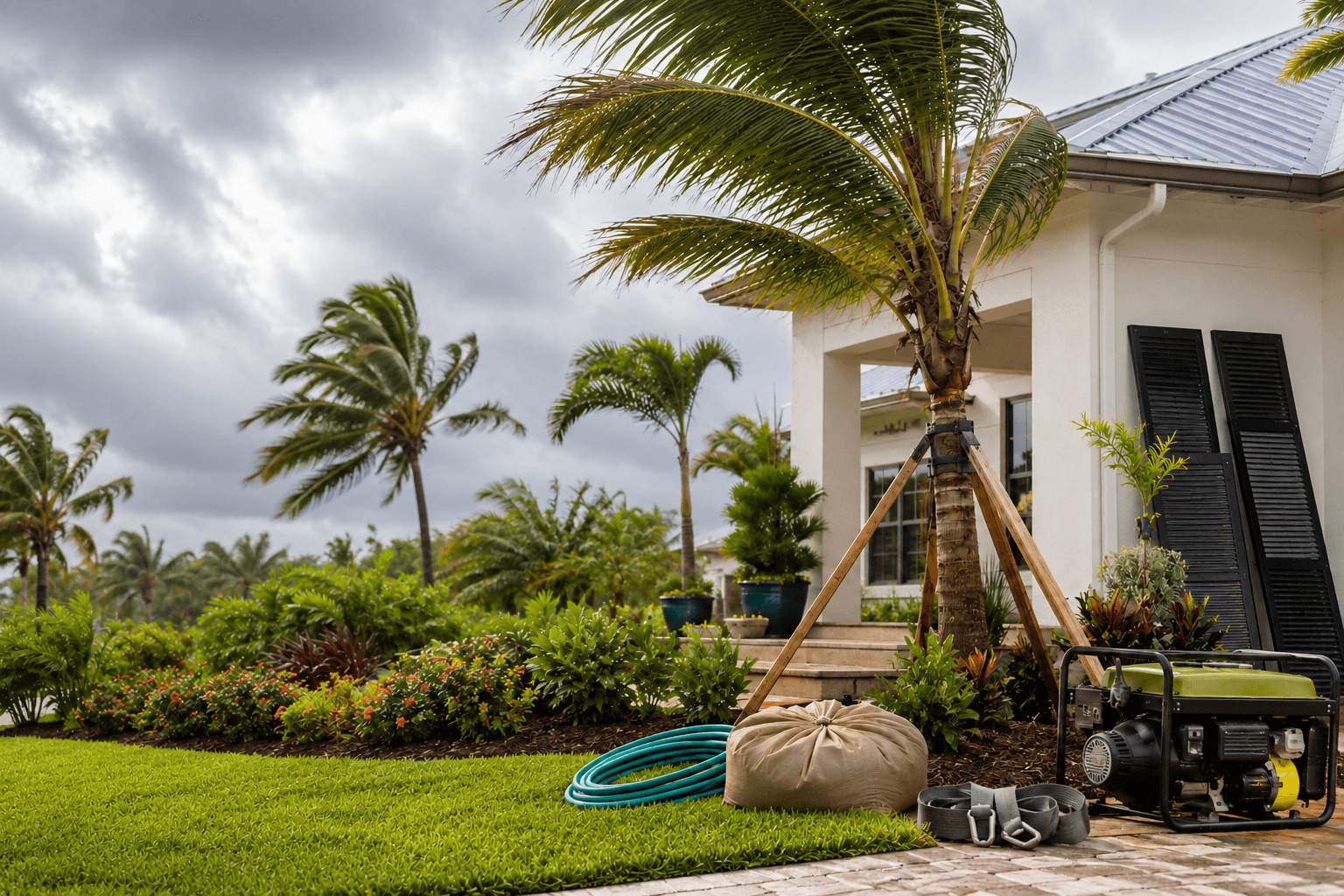
Leaning or uprooted palms should be stood back up as soon as possible, replanted at the original depth, and braced for at least 6 months.
Sod and beds
For lawns, most of the useful judgment happens with a soil test, not a guess. If the property was in the surge zone, UF/IFAS EP068 recommends testing soil electrical conductivity. Between 4 and 12 dS/m, aggressive flushing with fresh water may recover the stand. Over 12 dS/m, the salt load is generally too high to grow through and re-sod becomes likely. Irrigation water above 4.0 dS/m should not be used.
Do not default to gypsum. Florida sandy soils rarely develop a true sodium problem because rainfall leaches them. Base that call on a soil test.
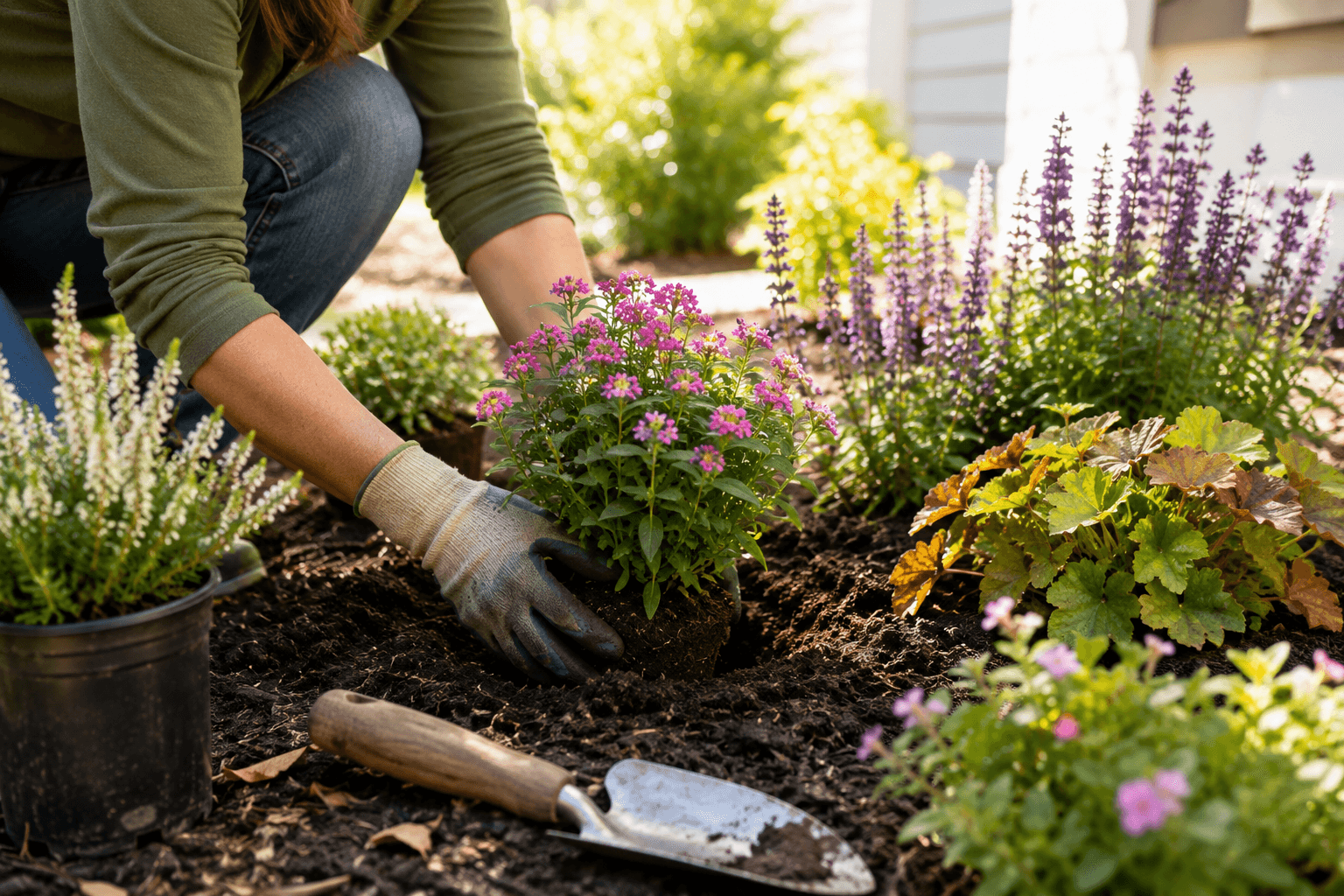
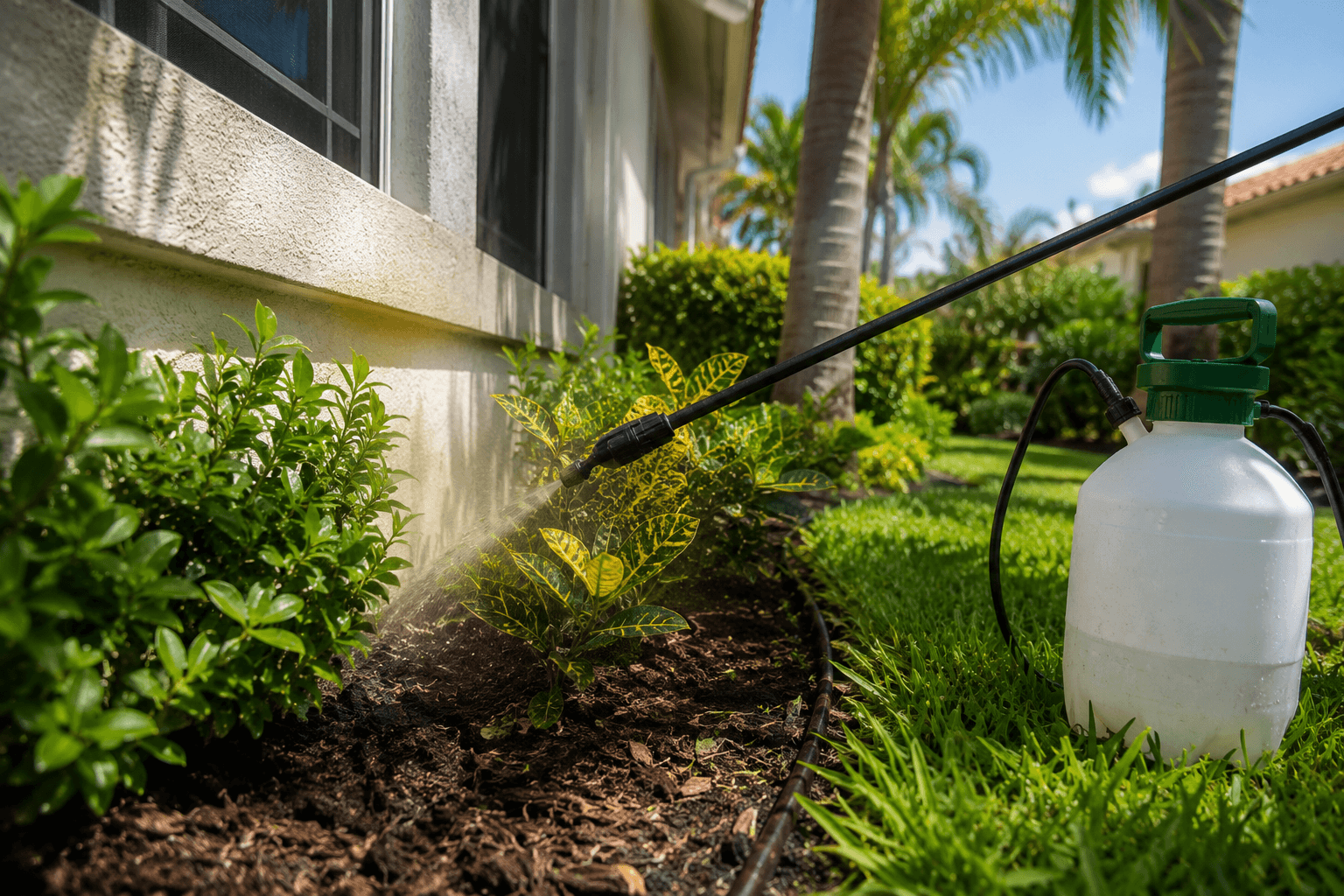
For beds, rinse foliage with fresh water as soon as you safely can to knock salt spray off the leaves before it burns them. Carefully remove silt and sand deposits from around plant crowns and root flares so plants are not buried above their original grade. Do not fertilize on top of salt damage. Fertilizer salts add to the load and pull more water out of stressed roots.
Wait a week or two before deciding what is dead in your beds. Wind burn, defoliation, and salt damage often take that long to fully declare themselves. Let plants push new growth and use that flush as your pruning guide.
Salvageable versus replace
UF/IFAS hurricane surveys are the most useful guide here. Their top performers, in the categories most relevant to SWFL yards:
- Live oak, sand live oak, southern magnolia, bald cypress, sabal palmetto, gumbo limbo, and buttonwood consistently show the highest survival rates.
- Crape myrtle, dahoon holly, American holly, and sweetbay magnolia are solid mid-range performers.
Frequent losses in the same studies:
- Laurel oak, water oak, pecan, and sand pine on the broadleaf and conifer side.
- Australian pine, melaleuca, weeping banyan and ficus, and African tulip tree, all weak-wooded or shallow-rooted.
- Queen palm and Washington fan palm rank at the bottom among common palms.
The Phoenix genus as a group (which includes several date palms commonly planted here) rates as high wind resistance in UF/IFAS FR175.
A palm with a broken trunk or a visibly damaged bud is a removal. A tree with a split trunk or major crack is a removal. Anything leaning past 45 degrees is a removal. Almost everything else deserves a proper assessment before you decide.
Documenting for insurance
Do this before you start cleaning up. Adjusters need to see the tree in place, in position, from multiple angles, with dated file metadata. Removing a tree from a roof before it is documented weakens the claim.
Typical Florida homeowner policies cover sudden, accidental tree damage from wind and hurricane, usually with a separate wind or hurricane deductible. Coverage for the plants themselves is typically a small percentage of the dwelling coverage, often with per-plant sub-limits. Read your policy for the exact numbers.
Tree removal is generally covered when a tree hit a covered structure (house, garage, fence, driveway). A tree that fell in the yard and hit nothing is often not covered for removal. A tree that fell because it was already dead or diseased is usually excluded as owner negligence, which is one reason to keep pre-season photos on file.
Florida's hurricane claim filing window has changed more than once in recent years, so do not rely on a number you read somewhere. Contact your carrier as soon as it is safe to do so and confirm your policy's actual filing deadline in writing.
FEMA Individual Assistance does not generally pay to replace landscape trees or shrubs. It may reimburse for debris removal that is blocking safe access to the home, or for tools like a chainsaw. Landscape replacement is on private insurance, not FEMA.
Who to call and how to avoid scams
For any real save-or-remove call on a mature tree, hire an ISA Certified Arborist. You can verify credentials in the public ISA directory at treesaregood.org. Ask for and independently verify general liability insurance, workers' comp, and a business license. Call the insurance carrier directly to confirm the policy is in force.
The Florida Attorney General has issued the same warnings after Ian, Helene, and Milton. The scam pattern is consistent: unsolicited door-to-door offers, demand for cash or a large upfront payment, no written contract, out-of-state plates, and pressure to sign right now before the crew moves on. Get multiple written estimates. Confirm debris haul-off is included. Never pay in full before work is complete. Suspected scams can be reported to the Florida Attorney General at 1-866-9-NO-SCAM.
Permits still apply after a storm, but the process is expedited. In Cape Coral, storm-damage repair work generally still requires a permit, but the city runs an emergency track after a declared event and typically waives fees for damage-related permits. Cape Coral Permitting is at 239-574-0546 and the storm-inspection line is 239-574-0555.
Lee County protects native trees, and rules differ between unincorporated Lee County and each incorporated city (Cape Coral, Fort Myers, Sanibel, Bonita Springs). Confirm with your jurisdiction before removing a large or protected tree, even if it is damaged. Immediately hazardous trees on a structure, blocking access, or on a power line typically bypass standard review, but document with photos and call the city when you can.
What NOT to do
Do not touch, move, or cut anything in contact with a power line.
Do not cut a leaning tree that is resting on a house or car yourself.
Do not top a damaged tree. Cutting the main leaders back to stubs creates weak, poorly attached regrowth that fails in the next storm, and it can kill the tree outright. UF/IFAS and ISA are both explicit on this.
Do not over-prune survivors right after the storm. Green leaves, even wind-tattered ones, are still feeding the tree while it recovers. Remove broken, split, and hanging material only for now.
Do not fertilize salt-stressed plants or turf. Rinse first, wait to feed.
Do not clean up before you photograph for insurance.
Do not sign a contract with an unsolicited door-knocker, and do not pay full price upfront in cash.
Do not lay fresh sod over a damaged, salt-loaded, or heavily silted base. The new sod will fail on the same problem.
Do not try to right a large tree yourself. UF/IFAS restricts do-it-yourself righting to trunks under 4 inches or recently planted stock.
Realistic recovery timeline
At 24 to 48 hours, utility hazards are addressed by the power company, structural hazards are cleared by insured crews, damage is photographed, foliage is rinsed of salt spray, and salt-inundated soil is flushed with fresh water once safe.
At one week, canopy dieback becomes more visible, a certified arborist walks the property for save-or-remove decisions on major trees, the insurance claim goes in with a full photo package, silt is cleared from around crowns, and broken small branches are pruned back to the collar.
At 30 days, shrubs and bedding plants push new growth and you use that flush as your pruning guide. Palm spear leaves start to show whether the bud survived. Turf that is going to green back up is greening up. Minor sod patches get replaced.
At 90 days, delayed pine and hardwood dieback declares itself. A second arborist walk confirms which "wait and see" trees are actually recovering. Larger turf renovations wrap up.
Across a full growing season and beyond, palm recovery becomes clear (it takes at least 6 months, often longer, to know), restoration pruning on saved trees is done in stages over multiple seasons so the tree can rebuild energy reserves, and any replacement plantings go in with species selected for higher wind resistance next time.
The bottom line
Storm recovery is measured in seasons, not weekends. The two most expensive mistakes we see after every SWFL hurricane are the same ones: over-pruning trees that would have recovered on their own, and hiring the first stranger with a chainsaw who knocked on the door. Slow decisions, made after a real assessment, save both trees and money.
When you are ready to move from cleanup to rebuild, our team handles both sides. Ongoing property care, storm assessment walks, and post-storm pruning fall under landscape maintenance. Replanting with wind-resistant species and rebuilding beds and turf after a bad hit fall under landscape installation. And if you have not read it yet, the hurricane season prep companion post covers what to do in May so next season's recovery is a shorter one.