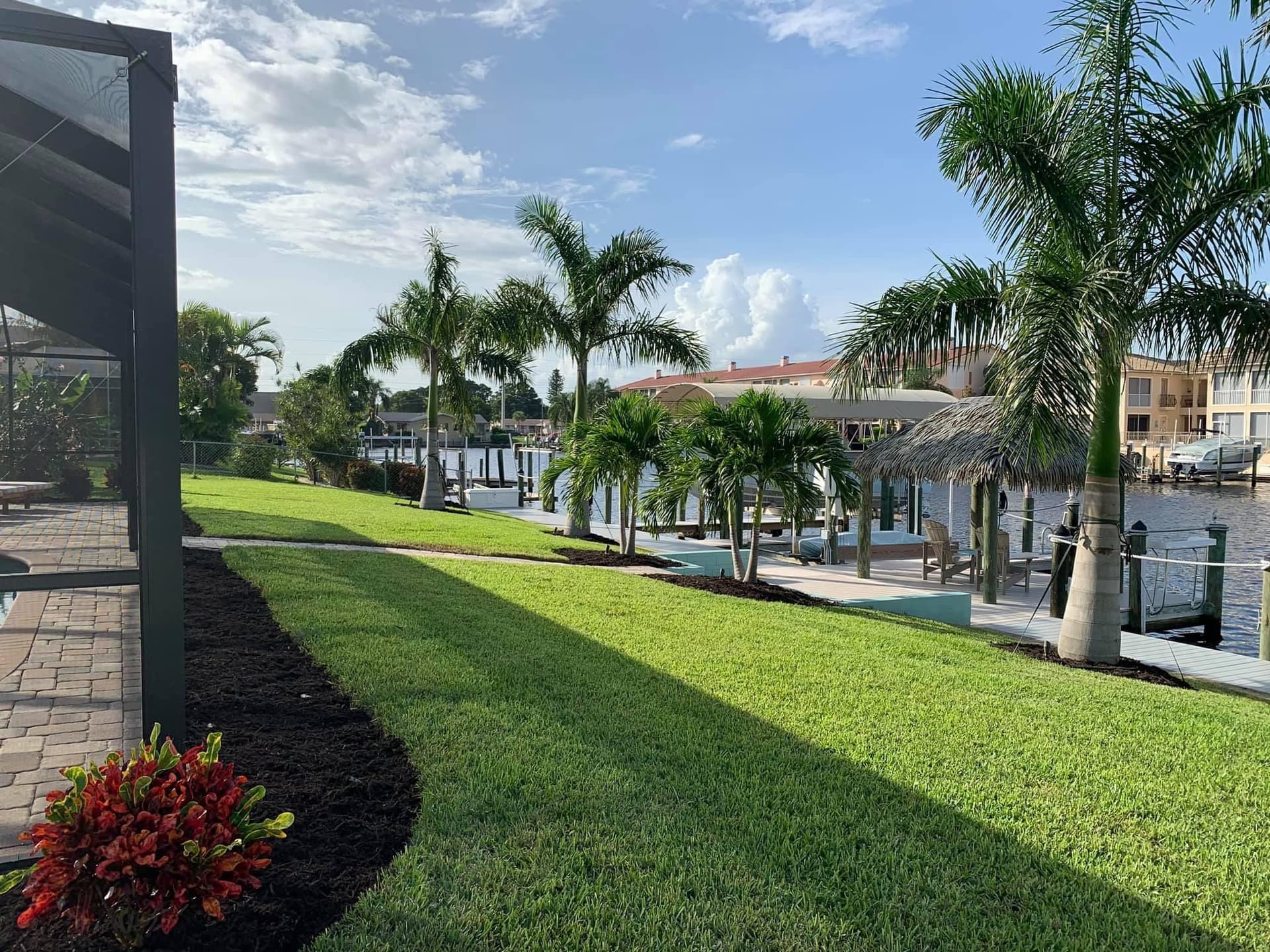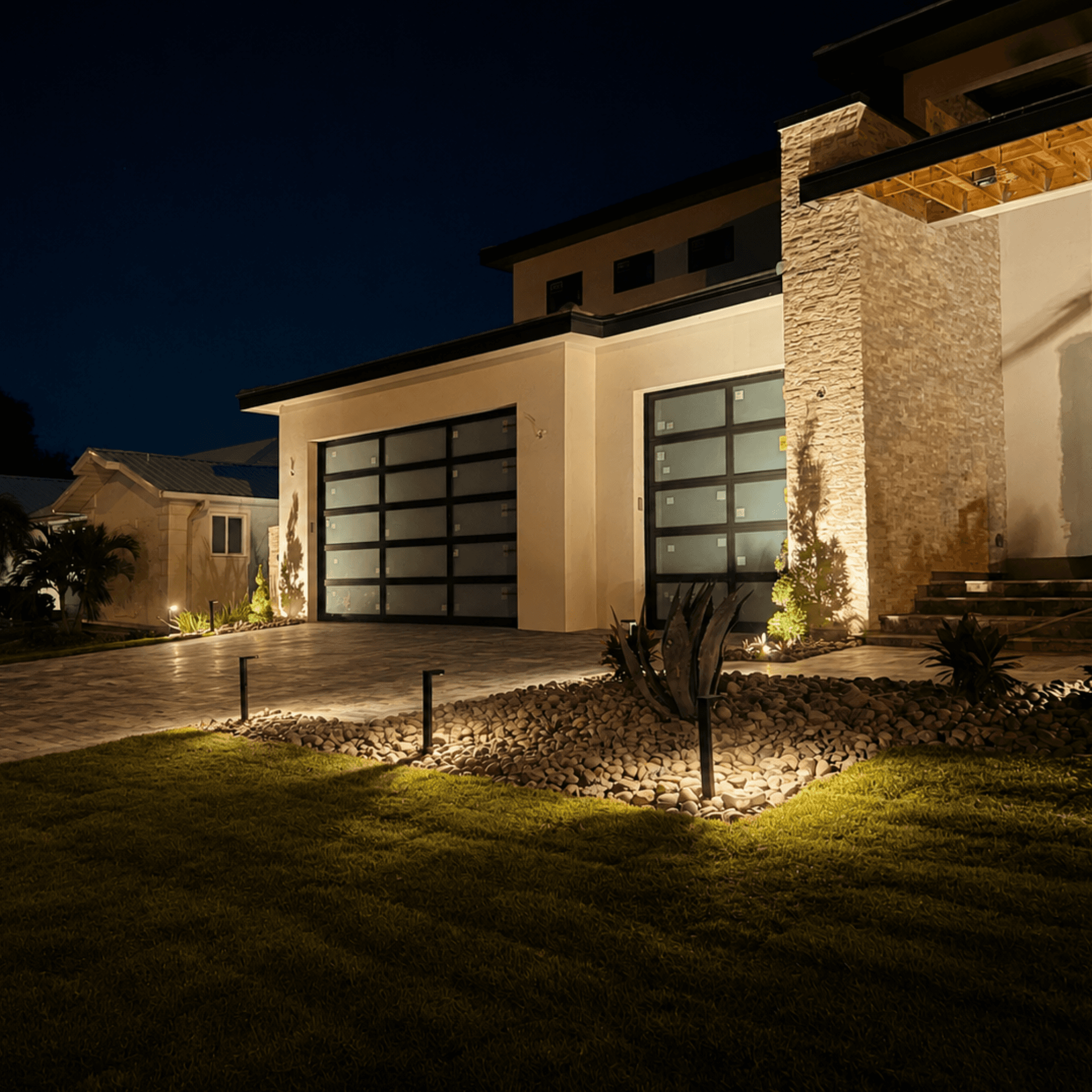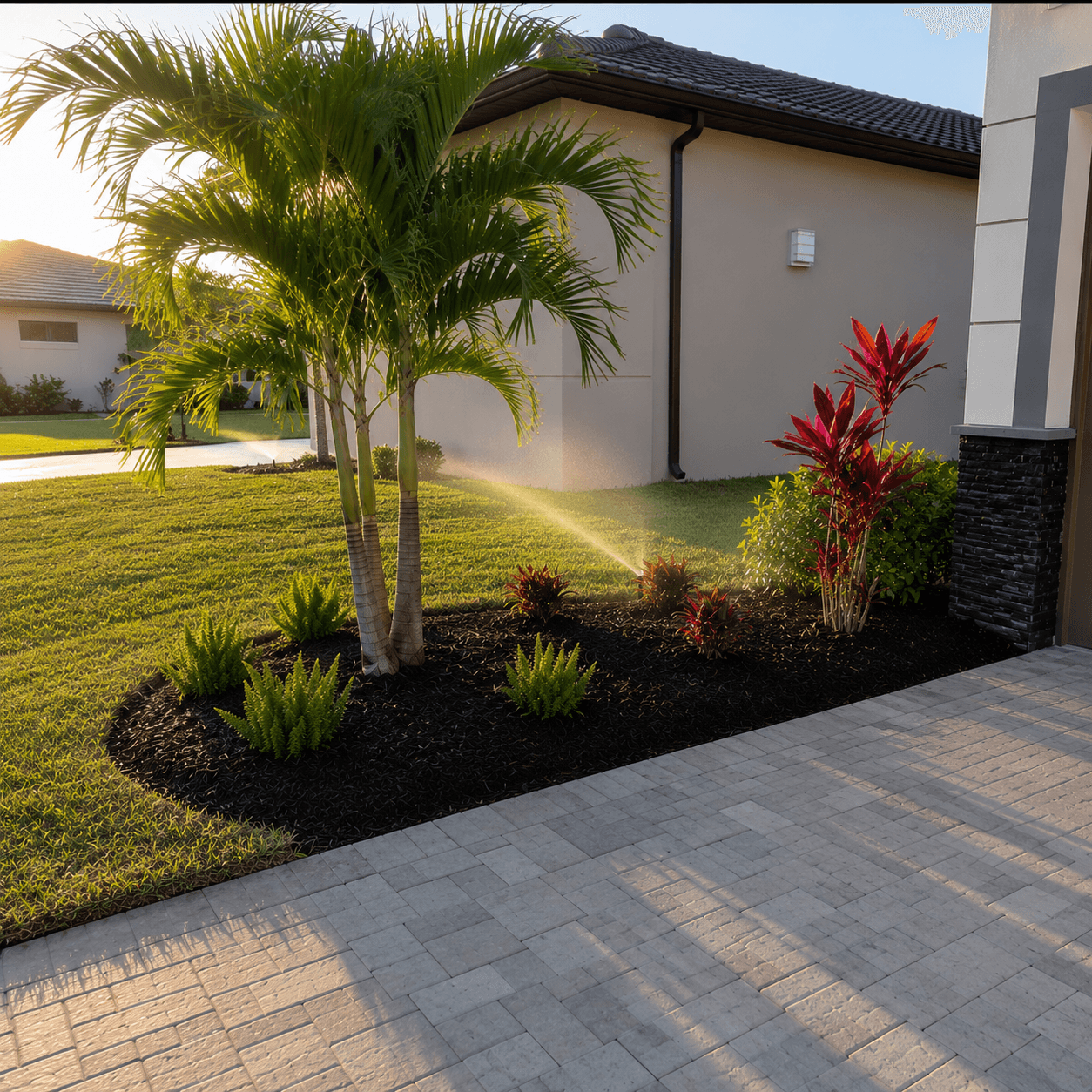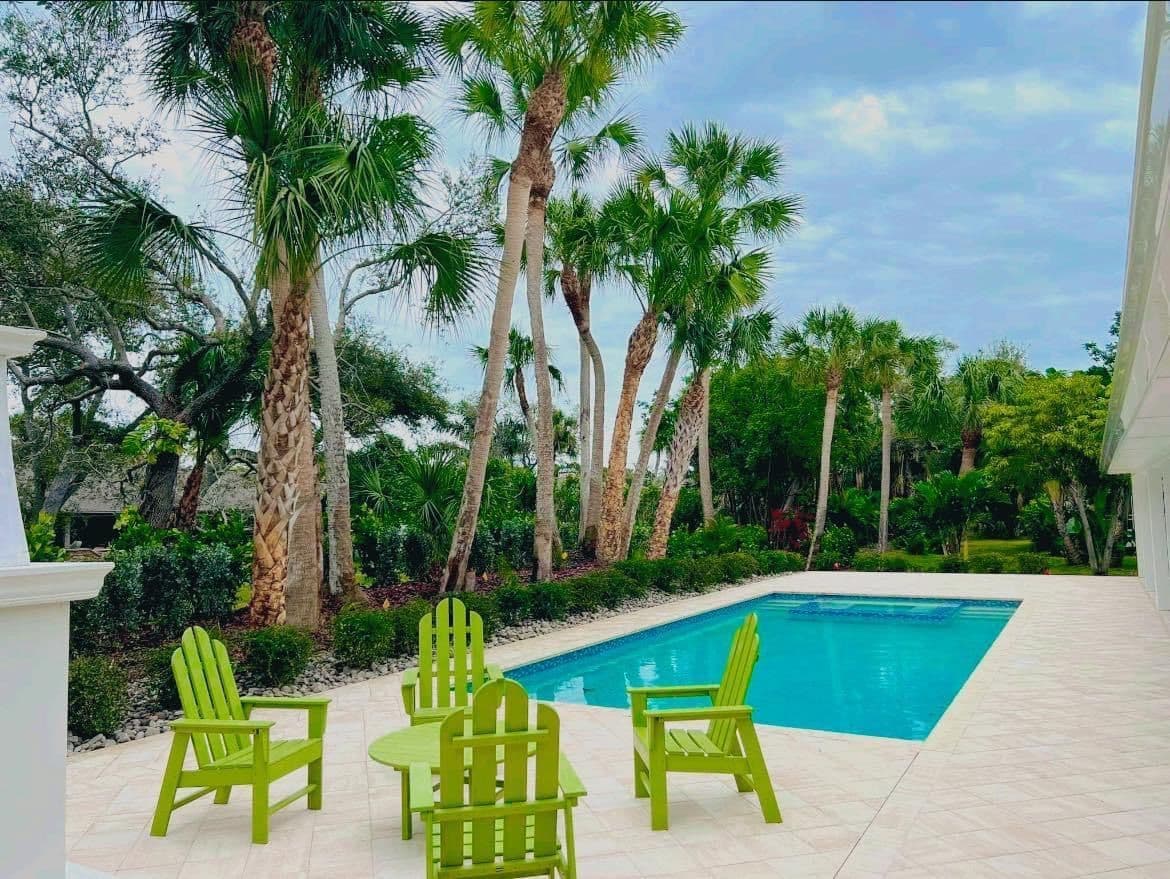
A pool in Southwest Florida is a full-time landscape client. Fronds fall in it, fruit stains around it, roots push up under it, and salt-laden wind blows across it. Most of the pool landscape failures we see in Cape Coral and Fort Myers are not design failures. They are plant-choice failures made three, five, or ten years earlier, when someone picked a species for the way it looked at a nursery and did not think about what it would drop, root, or grow into.
The mindset shift is simple. Design for cleanup and long-term behavior first, then design for the look. A poolside plant palette that works starts with what UF/IFAS Extension has actually studied, mostly around salt tolerance, wind resistance, and species-level habits. Everything else is style on top of that foundation.
Plants to skip near the pool
Weeping fig (Ficus benjamina). The UF/IFAS tree fact sheet describes aerial roots that descend from the branches and take root, forming new trunks over time. In the ground next to a pool deck, that same aggressive root behavior cracks pipes, buckles pavers, and can invade the pool shell. It is a good plant in the wrong place. A pool deck is the wrong place.
Queen palm (Syagrus romanzoffiana). UF/IFAS notes heavy fruit clusters and persistent dead fronds that require frequent pruning, and the species has been assessed as potentially invasive in Florida. UF/IFAS Collier County has also written about a fatal disease pressure on queen palms in the region. Two problems compound into one bad choice for a pool edge.
Oleander (Nerium oleander). All parts of oleander are toxic, per UF/IFAS EDIS ENH1310 and ST412. Sap can cause contact dermatitis, ingestion causes gastrointestinal and cardiac symptoms, and burning the trimmings releases toxic fumes. If children or pets use the pool area, oleander does not belong within reach of it.
Mulberry (Morus spp.). UF/IFAS Gardening Solutions is direct about the purple fruit staining concrete, decking, and pavers. It also drops heavy pollen. A pool deck is exactly the surface you do not want fruit-stained.
Crape myrtle at pool edge. Constant flower and seed drop through the summer swim season adds to skimmer load. Beautiful plant, wrong spot.
Plants that work near the pool
Bird of paradise (Strelitzia reginae). UF/IFAS EDIS FPS-563 describes an evergreen habit that does not shed leaves the way deciduous tropicals do, plus drought tolerance once established and tolerance of light salt spray. That combination is why it shows up over and over in poolside plans.
White bird of paradise (Strelitzia nicolai). UF/IFAS EDIS ST604. Same family, bigger vertical accent. Use it where you need architectural height without the debris of a fruiting tree.
Silver buttonwood (Conocarpus erectus var. sericeus). UF/IFAS EDIS ENH339 and Gardening Solutions describe strong tolerance of sun, sandy soils, and salt. It can reach 40 feet if untrimmed, but is typically kept as a clipped hedge or accent form. The silvery leaf catches evening light beautifully next to water.
Clusia (Clusia rosea and C. guttifera). Rated high salt tolerance in UF/IFAS ENH145 Salt Tolerance of Landscape Plants for South Florida. Fibrous roots and dense evergreen foliage make it a strong choice for privacy planting behind the pool cage.
Ixora (Ixora coccinea). UF/IFAS Gardening Solutions and EDIS list ixora as moderately drought and salt tolerant, handling saline irrigation but not direct ocean breezes. Excellent color contribution for interior pool decks that do not sit right on the water.
Podocarpus (Podocarpus macrophyllus and dwarf forms). Moderate salt tolerance in UF/IFAS references, and the go-to for tall formal hedges around interior pool yards. Better in interior placements than exposed coastal ones.
Croton (Codiaeum variegatum). Listed with moderate salt tolerance in ENH145. Bold color, evergreen habit, low shed.
Ti plant (Cordyline fruticosa). UF/IFAS lists cordyline among salt-tolerant shrubs at moderate levels. Upright form and colored foliage work well as a mid-story between palms and ground cover.
Ornamental grasses. Muhly grass and fakahatchee grass give you texture and movement with very little debris in the water.
Sabal palm (Sabal palmetto). UF/IFAS post-hurricane wind surveys (FR010) rated sabal palm at 97 to 100 percent standing after Hurricanes Erin and Opal. It is also salt, wind, and drought tolerant. Florida's state tree earns its status.
Foxtail palm (Wodyetia bifurcata). Self-cleaning fronds mean less material dropping into the pool. UF/IFAS South Florida salt tolerance references list it in the moderate to high range.
Areca palm (Dypsis lutescens). Clumping habit for screening, non-invasive fibrous roots, moderate salt tolerance. UF/IFAS Ask IFAS Arecaceae references cover the family's general root morphology.
Christmas palm (Adonidia merrillii). Stays under 25 feet, tidy habit, suited to Zone 10. Note that ripe fruit does drop and can stain, so site it accordingly.
Florida thatch palm (Thrinax radiata). Compact, salt tolerant, low debris. A good native choice for a smaller pool area.
Palm placement
Palm roots are not oak roots. UF/IFAS references on Arecaceae describe a fibrous, adventitious root system that emerges from the base of the trunk in a bundle, rather than expanding radially over time the way a broadleaf tree root does. That is why palms are generally considered safer near hardscape than most shade trees. It is not a license to plant them anywhere. Poor site prep, standing water, and decades of irrigation pressure can still push a root mass against a thin deck edge.
The bigger placement question is above ground. Plan for the mature canopy, not the palm you are looting into the truck. UF/IFAS FR010 and FOR120 wind resistance surveys give you real numbers to plan with. Sabal palm sits in the top tier at 97 to 100 percent standing after Erin and Opal. Royal palm survival improved with deep soils, rising from 63 percent in Andrew to 87 percent in Charley. Washington palm came in at 92 percent in Charley and 80 percent in Jeanne. Around a screen cage, keep tall or heavy palms outside the drop radius. A downed frond tears a screen. A trunk failure crushes framing.
Height matters as much as species. Foxtail matures near 30 feet. Sabal runs 30 to 65 feet. Christmas palm stays under 25 feet. Areca as a clump reaches 20 to 35 feet. Match those numbers to the lot, not to the size you buy.
Salt tolerance matters more than you think
If your pool is on a canal or within reach of Gulf breezes, salt is the single biggest driver of what survives. UF/IFAS ENH145, Salt Tolerance of Landscape Plants for South Florida, is the reference to plan against. In the high salt tolerance columns you find sabal palm, silver buttonwood, clusia, sea grape, and bird of paradise. Foxtail palm sits in the moderate to high range. Croton and cordyline land in the moderate zone. Ixora tolerates saline irrigation but not direct ocean breeze.
On an interior lot, moderate salt tolerance is enough. On a canal-front lot in Cape Coral, or a Fort Myers Beach property, plan the exposed sides of the pool with the high salt tolerance list and reserve the moderate list for the leeward interior.
Screen enclosure interior versus open pool deck
Inside a screen cage, airflow drops and humidity around the foliage climbs. Evergreen tropicals with clean shedding habits like bird of paradise and cordyline handle that environment well. Rainfall inside the cage is also lower under the roof panels, so containers and beds under cover need supplemental irrigation.
Outside the cage on an open pool deck, wind and sun are the story. This is where the high salt and high wind list earns its keep. Sabal palm, silver buttonwood, clusia, and foxtail palm are the reliable structural choices. On canal-front and coastal exposures, lean harder into the ENH145 high salt tolerance column and away from anything you love only for the flower.
The USDA zone reality
Cape Coral and Fort Myers both sit in USDA hardiness zones 10a and 10b, with winter minimums in the 25 to 35 F range on the 2023 map. That gives you a wider tropical palette than Central Florida (9b), so Christmas palm, foxtail, and cordyline are dependable in the ground year round with only rare cold events causing damage. It is also cooler than Miami (11a), which means the occasional inland frost still needs to be planned for. Extremely cold-sensitive tropicals like young royal poinciana or some heliconias do better sited against structures that hold warmth overnight.
Zone data is a floor, not a design guide. It tells you what will not die. Salt, wind, mature size, and drop habit tell you what will actually look right around the pool ten years from now.
Bringing it together
A good poolside plan usually resolves into three layers. Structural palms and small trees for the canopy tier. A mid story of clusia, silver buttonwood, ixora, croton, and cordyline. A ground cover layer of asiatic jasmine, perennial peanut, or a mulched edge instead of turf running to the coping. Vertical accents get paired to frame the pool rather than close it in, and the primary sight line from the interior of the home is kept open.
If you are planning a new pool or reworking an older one, a walk-through of the site beats any generic list. We look at wind direction, canal exposure, screen cage geometry, sun angles, and the specific mature behavior of every species you are considering. Our landscape installation team has built and rebuilt pool landscapes across Cape Coral and Fort Myers since 1986, and the same handful of plant choices show up on the surviving ones for a reason. Get the palette right the first time and the pool becomes the calm center of the yard, not the daily cleanup.